


By Marc Hyden
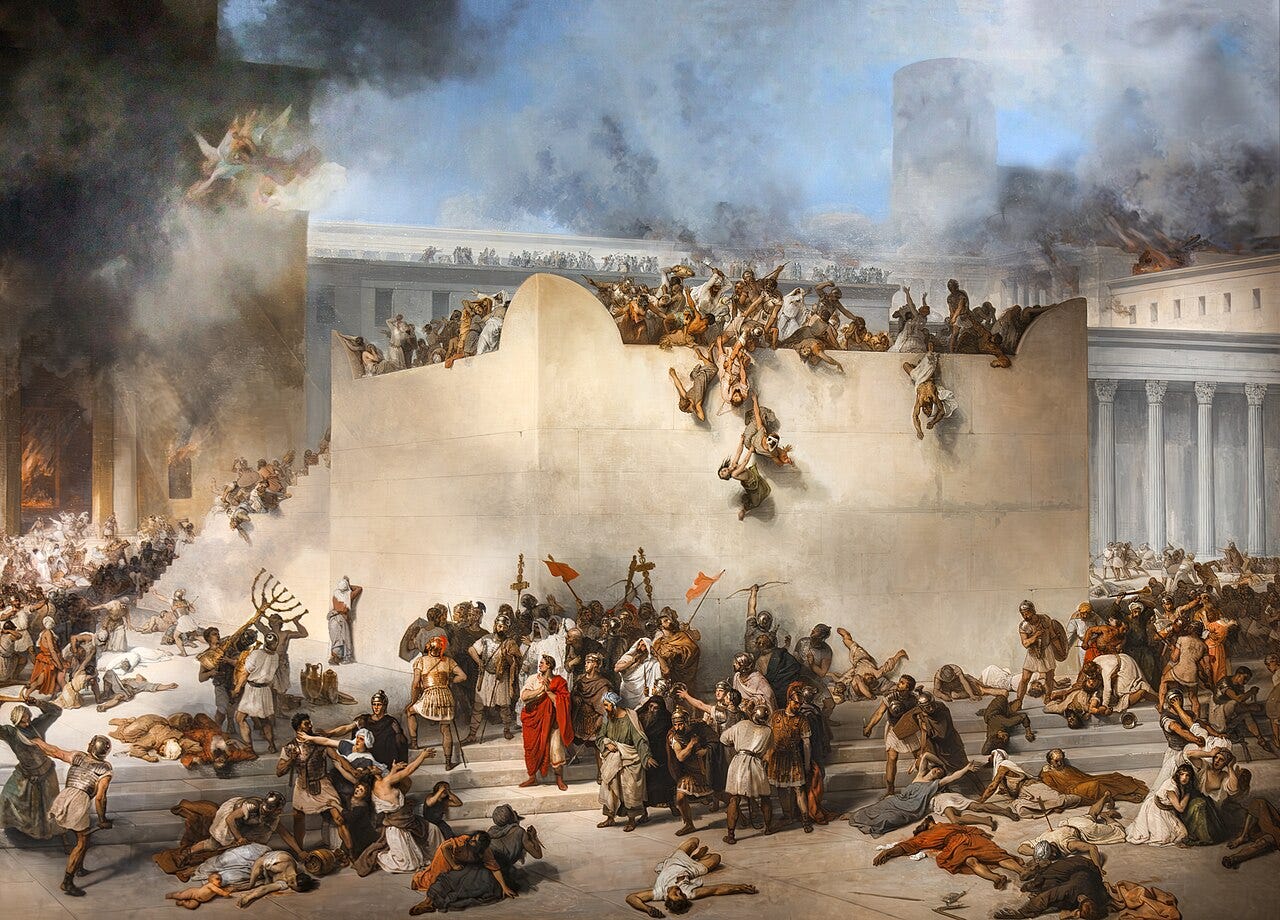
Standing on Jerusalem’s Temple Mount in 70 CE, Roman commander Titus Flavius Vespasianus, better known simply as Titus, watched as flames engulfed the sacred Jewish Temple. As they leapt higher and consumed it, Jewish cries of terror and anguish echoed across Jerusalem. Meanwhile, Roman legionaries pillaged the precinct and reveled in the destruction until little was remaining of the once resplendent Temple.
For the Romans, this represented a victory, but for the Jews, it was an unthinkable catastrophe. The Romans had razed the Jews’ most holy site, and as a result, sacrificial worship virtually came to an end. For the nearly two millennia since, much of the Jewish faithful has mourned this loss, but beneath their agony lies an age-old question: How culpable was Titus in the Temple’s demolition?
From antiquity to the modern-day, historians have debated whether Titus wanted to save or topple the storied Temple. While it is impossible to ascertain what Titus was thinking on that fateful day, a re-examination of ancient commentary provides some clues.
By Titus’ era, much of the Jewish ancestral homeland fell under Rome’s control, but the pagan Romans weren’t particularly gracious overlords. They oppressed the Jews, and were often disrespectful of Jewish customs and religious practices, which caused numerous disturbances in the holy land.
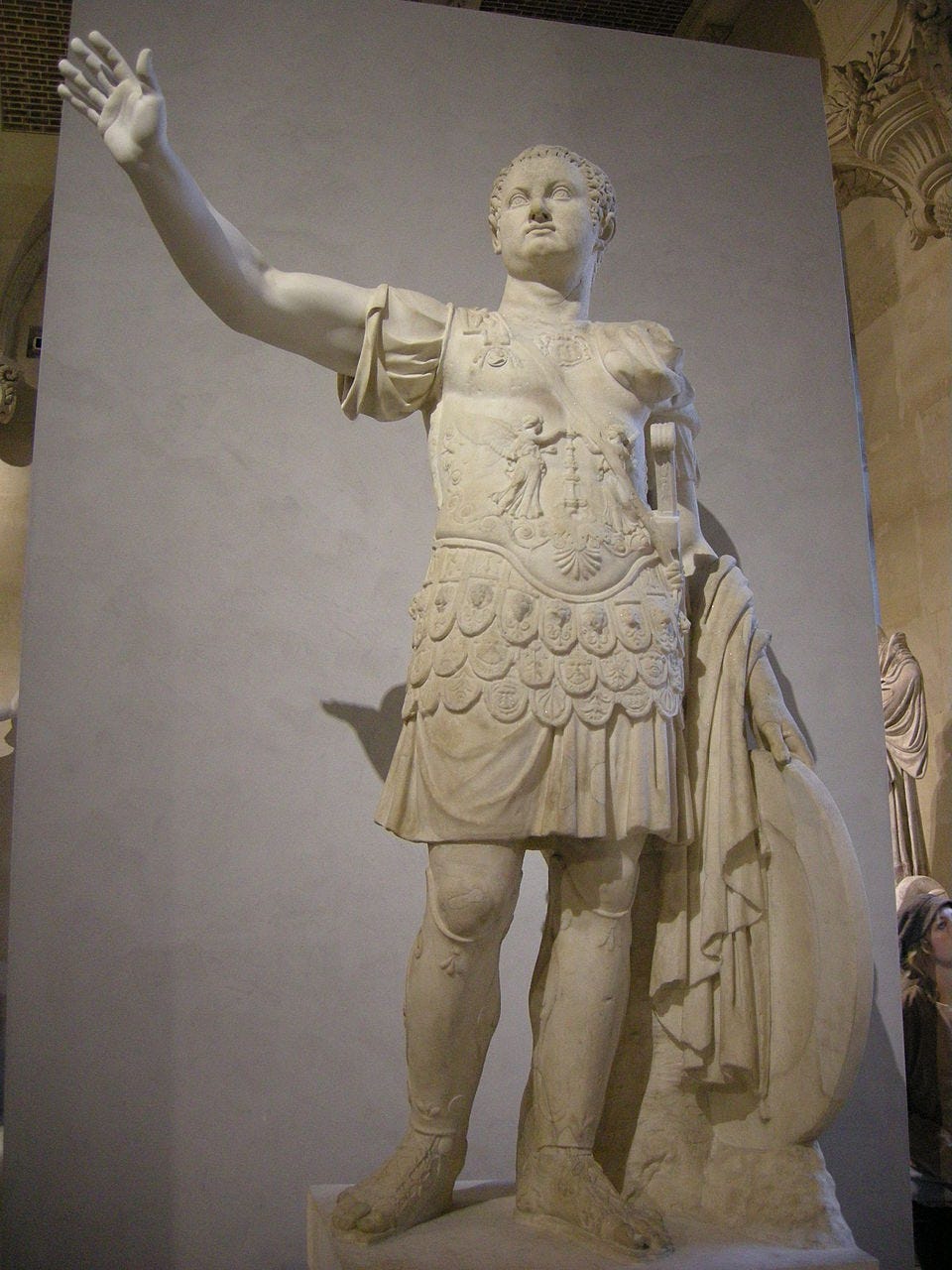
By 66 CE, the Jews were eager to be free of the Romans’ tyrannical rule, and myriad Jews revolted. Then-Emperor Nero tasked Vespasian with crushing the rebellion. He in turn asked his son Titus to assist him and lead the 15th Legion. Together, they waged a methodical and deadly campaign. Within a few years, the Romans had subjugated nearly all enemy strongholds—save for Jerusalem, Herodium, Machaerus and Masada.
Around this time, the Roman geopolitical landscape shifted dramatically. Nero was deposed, and after a series of conflicts, Vespasian became emperor in 69 CE. He subsequently made his son the Jewish War’s supreme commander and charged him with sacking Jerusalem. When Titus arrived outside Jerusalem’s city walls in April 70 CE with upwards of 65,000-80,000 soldiers, many of the Jews trapped inside must have assumed that the Roman had one objective in mind: the complete destruction of Jerusalem and its holy Temple.
Despite the extended and bitter nature of the First Jewish War, Titus was still willing to negotiate with the Jewish revolutionaries. Ancient historian and Jewish military commander Josephus asserted that Titus on a number of occasions offered to spare Jerusalem and its hallowed Temple if the rebels would simply leave the city. Titus even promised to give them safe passage so that they could continue defying Rome elsewhere. They refused all such offers.
The Roman siege of Jerusalem continued, but the legionaries eventually neared the Temple complex. Soon enough, it became clear to Titus that the Temple would eventually fall into his hands, but what happened next depends on who you believe. According to Josephus who was present during the siege, Titus convened his lieutenants to determine the Temple’s fate.
After some debate, the commander decided to spare the Temple because it was a work of beauty that had never offended him. As such, he and his deputies issued orders to ensure the Temple’s survival, but his soldiers did not follow his directives. During a skirmish between some Roman legionaries and Jewish insurgents, the Romans fought their way into the Temple complex. Then a soldier hurled a piece of burning wood into the Temple where it caught light.
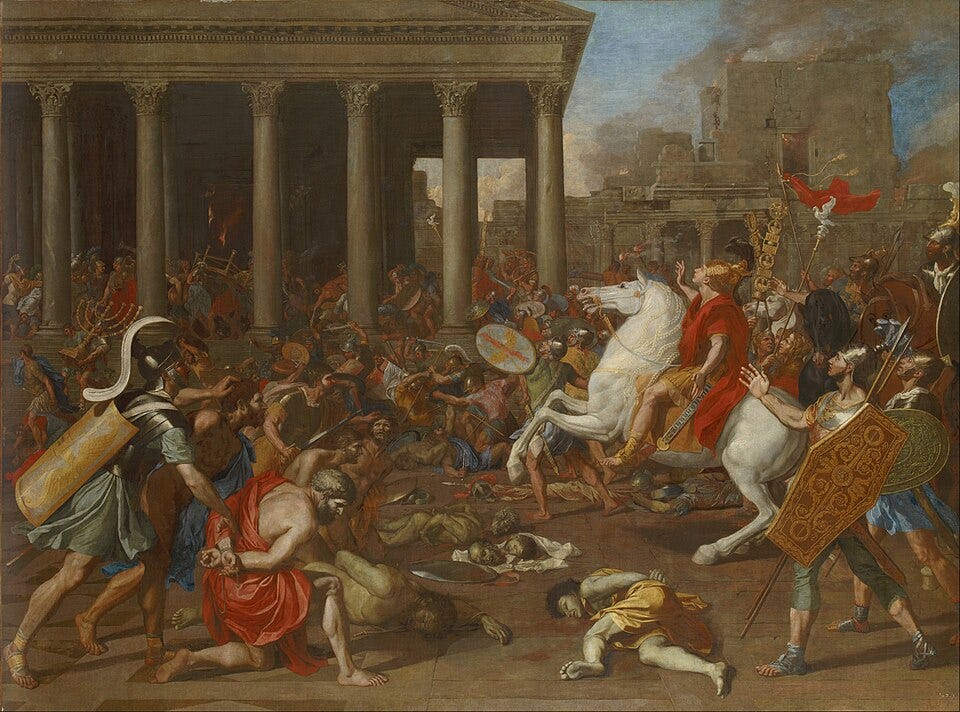
Someone alerted Titus to the Temple’s peril, and he rushed to the scene to save it. He ordered his troops to put out the flames, but many of his men ignored him. A number of others subsequently threw firebrands into the Temple. With this underway, Titus entered the Temple and determined that the sanctuary was not yet lost. He again implored his fellow Romans to preserve the Temple and empowered a company of lancers to defend it from Roman arsonists, but to no avail. Another Roman marched into the Temple with a firebrand and set it alight. The Temple was now irreparably lost.
This is the account that Josephus recorded, but not every ancient writer agreed. “Titus himself [held] the destruction of this temple to be a prime necessity of wiping out more completely the religion of the Jews and the Christians,” Christian writer Sulpicius Severus later asserted, “for they urged that these religions, although hostile to each other, nevertheless sprang from the same sources; the Christians had grown out of the Jews: if the root were destroyed, the stock would easily perish.”
Part of Severus’ statement is almost certainly incorrect. It is incredibly doubtful that Christianity factored into Titus’ calculus whatsoever, but Severus was emphatic that Titus wanted the Temple destroyed. Meanwhile, ancient Christian writer Paulus Orosius seemed to concur with Severus that Titus believed the Romans should consider razing it, “since its survival would encourage the enemy.”
So who is right?
First-hand accounts generally carry more credibility, and of all the historical reports, Josephus was the only author to personally witness the siege, which he described in detail in The Jewish War. Unfortunately, Josephus was not exactly an impartial, objective bystander. He was once a Jewish rebel leader, but after being captured, Vespasian and Titus spared his life and became his benefactors—providing him wealth, free land in Judaea and an apartment in Vespasian’s house. Josephus even adopted Vespasian and Titus’ family name: Flavius.
Considering Josephus’ loyalty to the Flavians and his Jewish background, he had reason to present the Flavians in the best possible light, while also exculpating Titus from one of the greatest sins from the Jewish perspective: defiling and demolishing the Temple. Simply put, Josephus had the motive to misrepresent the truth.
Other portions of Josephus’ account raise some questions too. He claimed on more than one occasion that Titus urged his men to save the Temple, but they willingly disobeyed him. It’s possible that they behaved in this manner, but that would mean that his troops were so undisciplined that they openly disregarded Titus’ directives in his presence. There are reasons to believe that Titus’ men struggled with restraint, but this would be an egregious and brazen offense. Instead, Josephus may have simply created this vignette so that Titus wouldn’t be directly blamed for the Temple’s burning.
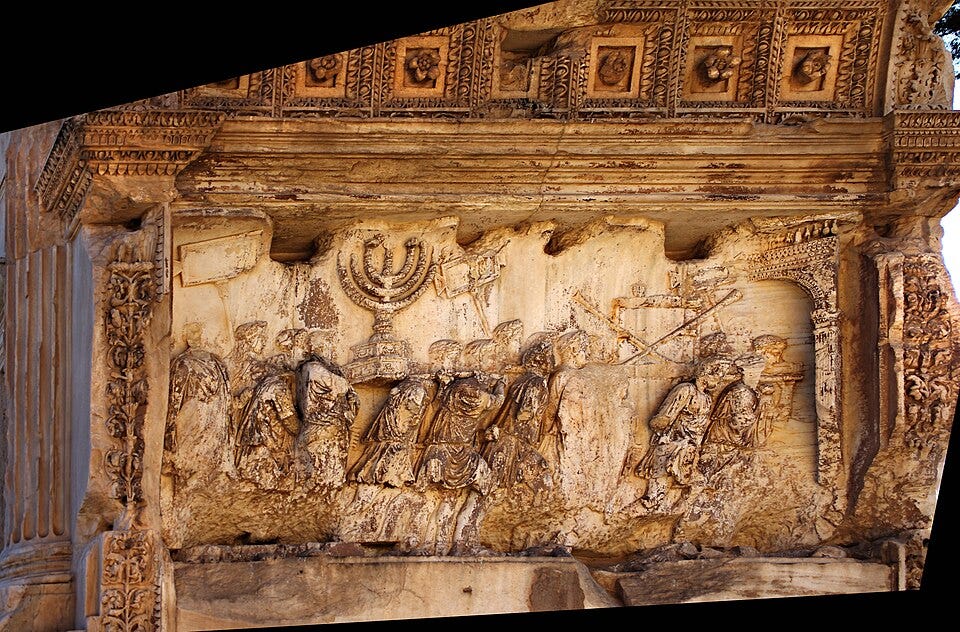
Whatever the case, Titus’ men plundered the Temple and transported the invaluable relics back to Rome where they were used in a celebratory triumph. Again, if Titus had planned to preserve the Temple—and presumably its contents—but his soldiers had defied him, would he have carried the Temple plunder back to Rome? It’s impossible to know, but if he truly cared for the Temple’s well-being and was remorseful, then it is plausible that he would have surrendered the contents to the Jewish people.
The truth is that Titus was likely weary of the insurgents’ refusal to surrender and continued attempts to outlast the Romans. As a result, he and his legionaries wanted vengeance and to punish the Jews in such a terrible manner that they would never challenge Rome again. The Romans probably believed that there was one way of accomplishing this: toppling the Temple. This also served another benefit to the Romans: The Temple was the symbolic heart of the rebellion, and with it gone, perhaps Jewish uprisings would cease, the Romans likely assumed. They were wrong.
Another instance also shows that Titus might have supported the Temple’s destruction. After he sacked Jerusalem, some Sicarii attempted to foment a rebellion in Alexandria, Egypt. Their exploits were unsuccessful, and afterward Titus and/or Vespasian ordered the demolition of the Jewish Onias Temple in Egypt. This is important, too, because this temple had long stood as a minor rival to the Jerusalem Temple and Jews even conducted sacrifices there.
If Titus was pleased to level this remaining Jewish temple, then it may indicate that he had previously been supportive of dismantling the Jerusalem Temple. Yet the Onias Temple’s fate could represent something much more sinister. The combination of its destruction and the primary Temple’s may imply that Titus intended on removing the Jews’ ability to conduct sacrifices, which might have served as an attempt to wipe out Judaism.
While Josephus is an indispensable source on the First Jewish War, the evidence suggests that his relationship with the Flavians might have undermined the veracity of some of his work. It is certainly possible that Josephus was correct and Titus labored to safeguard the Temple. However, it seems more than likely that Titus either ordered or at least supported the holy Jewish Temple’s razing, as Severus reported. Regardless of Titus’ thoughts on the Temple’s fate, it has never been rebuilt, which is a painful reminder to the Jewish faithful of what transpired on that ruinous day in 70 CE.
Featured image: Destruction of the Jerusalem Temple by Francesco Hayez ca. 1867 (Public Domain)
Marc Hyden is a Roman historian, and he is the author of “Emperor Titus: The Right Hand of Vespasian.”

Emperor, general, and Vespasian’s right hand, Titus Flavius Vespasianus (better known as simply Titus) was remembered by the Romans as a leader to be celebrated and a deity to be worshiped. While he was not without fault--having committed numerous egregious transgressions--his life and achievements are undeniably impressive. He survived imperial turnover, lived through the great fire of Rome, presided over the empire as Vesuvius destroyed numerous cities and plague ravaged his homeland, and hosted Rome’s vaunted 100-days of games.
This book draws on the scant historical sources, the archaeological record, and modern academic commentary to present the most comprehensive available account of Titus’ life. Long neglected by historians, Titus’ significant role in Roman history is presented here in the fullest detail. Hero or villain, there are few pivotal historical figures like Titus who straddled more momentous history and whose effects are still felt today.


_FO228685_bis_Photo_by_Paolo_Villa.jpg)
_La_distruzione_del_tempio_di_Gerusalemme_-Francesco_Hayez_-_gallerie_Accademia_Venice.jpg)
History is written by the victors...