


How the emperor who came closer than anyone to restoring the Roman Mediterranean ultimately helped create the world that replaced it
In the year 476, the Roman Empire supposedly fell. At least, that is the date with which generations of schoolchildren have been taught to mark the end of the Western Roman Empire. Romulus Augustulus, the young emperor in Italy, was deposed by the Germanic military commander Odoacer. The imperial insignia were sent to Constantinople. The ancient world, according to the traditional story, had come to an end.
Less than sixty years later, another Roman emperor sat in Constantinople and began trying to recover the territories that had been lost in the West. His name was Justinian. And for a remarkable moment, it seemed that he might succeed.
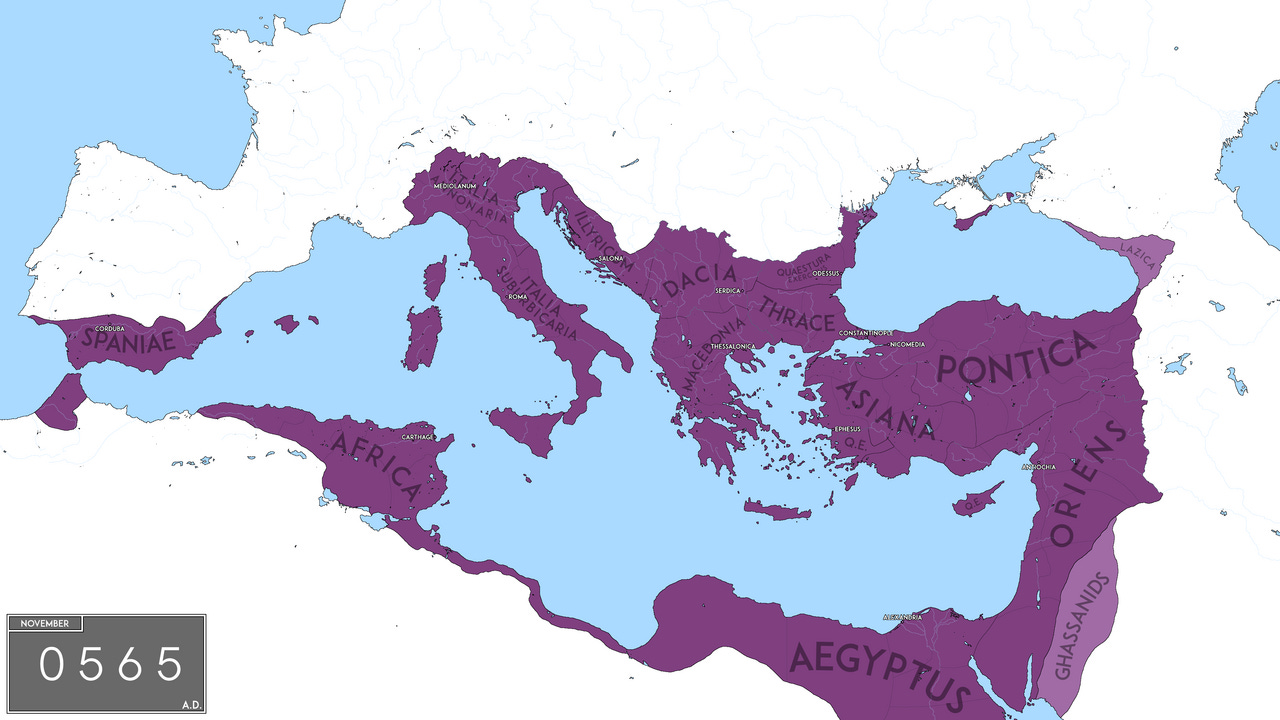
By the time Justinian died in 565, Roman armies had destroyed the Vandal kingdom in North Africa, conquered the Ostrogothic kingdom in Italy, established an imperial foothold in southern Spain and brought much of the Mediterranean back under Roman control. The empire once again stretched across territories that had been separated from Constantinople for generations.
Yet there was a terrible irony at the heart of Justinian’s achievement. The emperor who dreamed of restoring Rome may have made the empire less capable of defending that restoration. His reconquests were extraordinary. They were also ruinously expensive, politically disruptive and undertaken at precisely the moment when disease, war and demographic change were transforming the Mediterranean.
Justinian did not simply fail to restore the old Roman Empire. He may have succeeded too briefly—and at too great a price.
The Roman Empire That Had Never Really Died
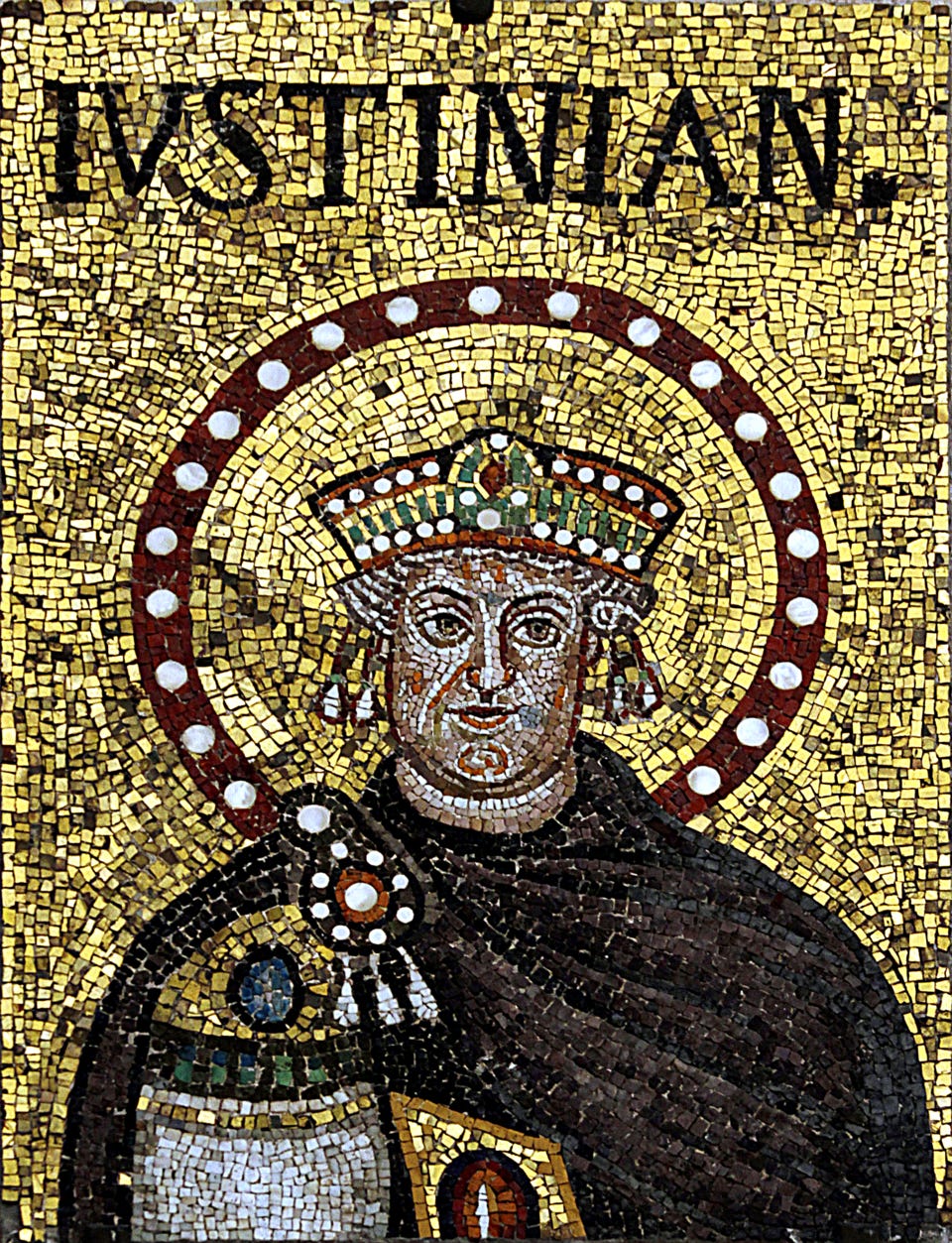
To understand Justinian’s ambition, we first need to abandon the idea that people in the sixth century thought the Roman Empire had ended in 476. They did not.
The empire ruled from Constantinople was still the Roman Empire. Its inhabitants called themselves Romans. Its emperor was a Roman emperor. Roman law remained the foundation of imperial government. Constantinople itself was the New Rome.
Modern historians often describe Justinian’s western campaigns as a “reconquest.” That is useful, but it can also be misleading. From Justinian’s perspective, he was not necessarily conquering a foreign world. He was recovering territories that had once belonged to the Roman state.
The sixth-century empire was therefore not a new Byzantine state consciously replacing Rome. It was still Rome—although a transformed Rome.
The transformation was profound. Greek was increasingly dominant in the eastern Mediterranean. Christianity had replaced the religious world of the Caesars. Constantinople rather than Rome was the political centre of imperial power. But the Roman idea remained extraordinarily powerful. And Justinian understood that idea better than most.
Justinian’s Great Opportunity
When Justinian became emperor in 527, he inherited an empire that was considerably stronger than the western territories that had replaced Roman rule. The eastern Roman state possessed wealth, an effective administrative machine and a professional military establishment. The West, by comparison, was politically fragmented.
The Vandals controlled North Africa. The Ostrogoths ruled Italy. Visigothic Spain was outside imperial control. Yet these successor kingdoms were not necessarily permanent geopolitical realities.
Justinian found his opportunity in Africa. The Vandal kingdom had been weakened by internal political disputes, religious divisions and succession problems. In 533, Justinian sent Belisarius, his most capable general, to Africa.
It was a breathtaking gamble. The result was even more breathtaking. Within a remarkably short campaign, the Vandal kingdom collapsed. Carthage was restored to Roman rule. The Vandal king Gelimer was captured. Belisarius returned to Constantinople in triumph, participating in a ceremony deliberately designed to evoke the ancient Roman triumph.
Procopius, Justinian’s contemporary historian, describes the spectacle in detail. The imperial government was consciously presenting the victory not merely as another military success, but as a restoration of Roman traditions. And perhaps this was the moment when Justinian’s impossible dream began to look possible.
If Africa could be recovered so quickly, why not Italy?
Italy: The War That Changed Everything
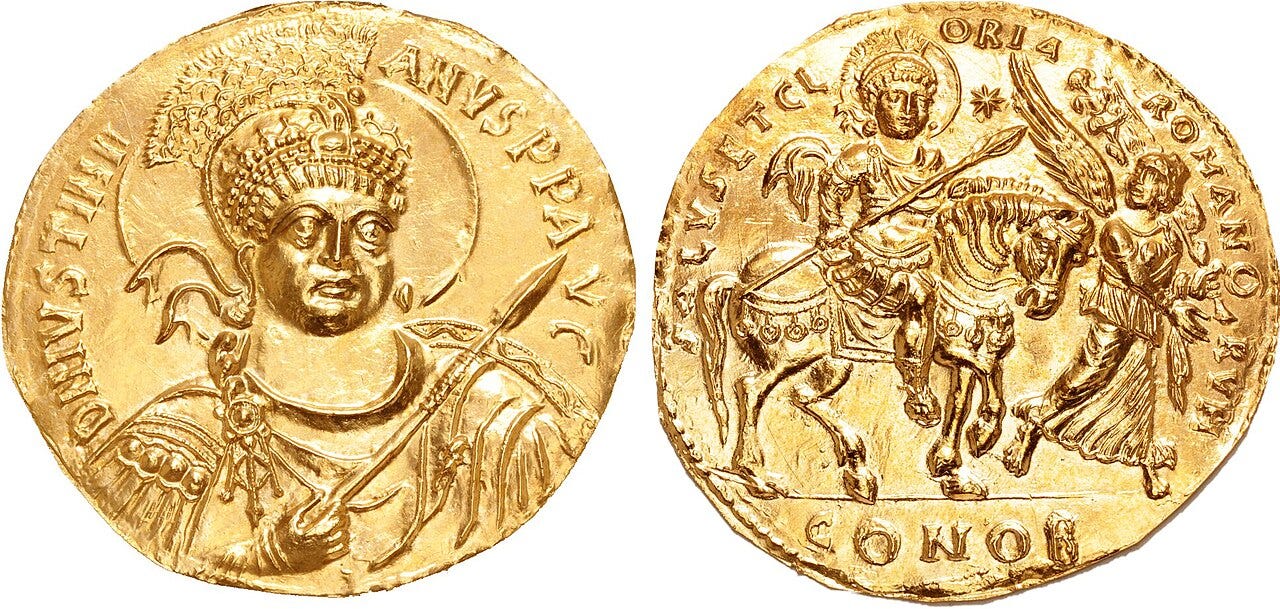
Italy was a very different proposition. In 535, Justinian launched his war against the Ostrogoths. At first the Romans made astonishing progress. Belisarius entered Italy and captured Rome in 536. The ancient capital of the empire was once again under Roman imperial control.
But the Gothic War would become one of the longest and most destructive conflicts of Justinian’s reign. Rome was not simply captured once. It became a battlefield. The Ostrogoths besieged the city. The Romans defended it. Armies marched repeatedly across the Italian peninsula. Cities were captured, lost and recaptured. The war dragged on for years.
What had begun as a campaign of restoration became a struggle for survival. Procopius gives us a remarkably vivid account of the devastation. His History of the Wars was written while many of these events were still within living memory, and his later Secret History presents an even darker interpretation of Justinian’s policies.
There are reasons to treat Procopius cautiously. He was not a neutral observer. His Secret History is an extraordinary attack on Justinian and Theodora, while his official histories and Buildings present a much more favourable image of imperial achievement. Yet precisely because we possess these contrasting portraits from the same author, they allow us to see how contested Justinian’s legacy already was.
The war finally ended with imperial victory in 554. Italy was Roman again. But what had been restored?
The Italy Justinian inherited after the Gothic War was not the Italy that Theodoric the Great had governed. Cities had been devastated. Agricultural production had been disrupted. The senatorial aristocracy had been badly damaged. The political structures that had allowed Italy to function under Ostrogothic rule had been shattered.
Modern scholarship has increasingly emphasized this problem. The Justinianic reconstruction did not simply repair Italy after the war; it fundamentally altered Italian society. The reconstruction itself damaged Rome and the senatorial aristocracy, helping create the political vacuum in which the papacy would acquire an increasingly important secular role.
The irony is difficult to escape. Justinian had gone to war to restore Roman Italy. The war itself helped destroy much of the political world he was trying to restore.
The Cost of Restoration
This is where the traditional story of Justinian begins to become more complicated. For generations, historians have portrayed the emperor as an overambitious ruler who squandered the resources of the eastern empire attempting to resurrect a dead western empire.
There is truth in that interpretation. The reconquests required enormous quantities of money and manpower. Justinian’s government had to maintain armies across enormous distances while simultaneously defending the empire’s eastern and Balkan frontiers.
But the situation was not as simple as “Justinian wasted everything on Italy.” The western territories could provide resources of their own. North Africa, Sicily and southern Italy were economically valuable. Their recovery could stimulate Mediterranean trade and return productive territories to imperial control. Modern economic historians therefore caution against viewing the reconquests simply as a disastrous drain on Constantinople. The recovery of western resources brought real benefits.
The problem was not that Justinian’s dream was irrational. The problem was that the empire had to pay for it while facing a series of catastrophes that Justinian could neither predict nor control.
First Came the Nika Revolt
In 532, before the great western campaigns had even begun, Constantinople exploded. The Nika revolt brought together factions normally associated with the city’s chariot racing culture and transformed them into a serious challenge to imperial authority.
The capital burned. Thousands died. Justinian reportedly considered fleeing. According to Procopius, it was Theodora who persuaded him to remain and confront the rebellion rather than abandon the throne. The revolt was eventually crushed with extraordinary violence.
But the destruction gave Justinian an opportunity. The old Hagia Sophia was destroyed, and Justinian ordered a spectacular replacement. Completed in only a few years, the new Hagia Sophia became perhaps the greatest architectural expression of his imperial ideology.
Justinian was rebuilding Constantinople. He was also rebuilding Rome’s legal and political inheritance.
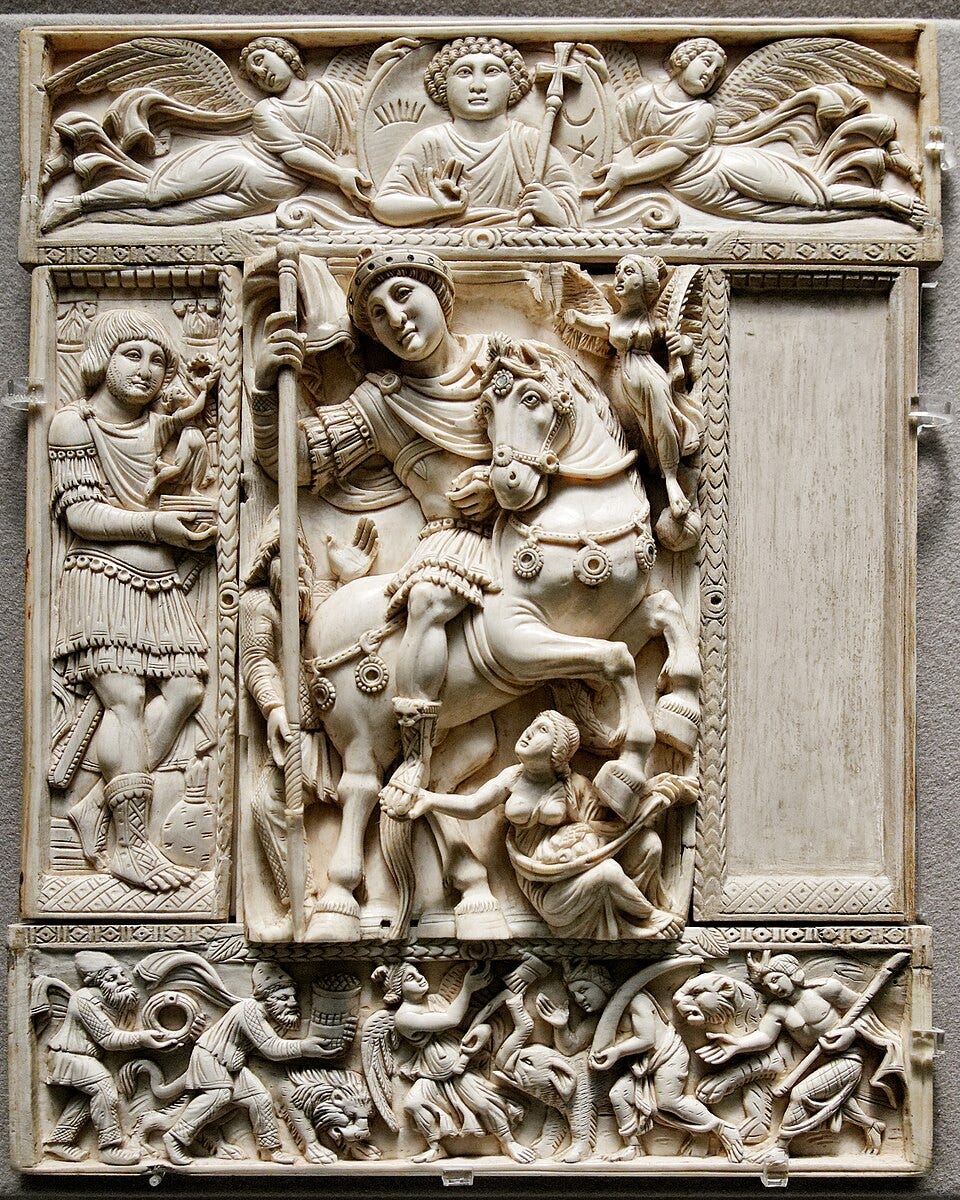
The Lawgiver
Justinian’s ambitions were not confined to territory. His great legal compilation, the Corpus Juris Civilis, reorganized centuries of Roman law. This achievement was arguably more enduring than any of his military conquests.
The emperor wanted to impose order upon the vast legal inheritance of the Roman world. His government therefore created a systematic body of law that would have consequences far beyond the sixth century.
The military campaigns, the building programme and the legal reforms were all part of the same imperial vision. Justinian was not merely trying to conquer land. He was trying to restore Roman order.
That helps explain why his reign remains so important. Even after most of his western conquests disappeared, his legal and architectural legacy survived.
Then Came the Plague
And then came the catastrophe Justinian could not defeat.
In 541, plague appeared in the eastern Mediterranean. It reached Constantinople in 542. It was the beginning of what historians call the Justinianic Plague—the first historically well-attested pandemic caused by Yersinia pestis. Repeated outbreaks continued across the Mediterranean world for generations.
The scale of the demographic disaster remains fiercely debated. Older accounts sometimes accepted enormous mortality figures reported by ancient writers. Modern scholarship has questioned whether those numbers can be taken literally. Archaeological evidence does not always support the picture of universal demographic collapse suggested by some literary accounts.
But the existence of a major pandemic is not in doubt. Nor is its potential significance. The empire was fighting wars, collecting taxes, supplying armies and administering newly conquered territories when disease began repeatedly disrupting human populations and economic activity.
Justinian’s government therefore faced a problem that no emperor could simply legislate away. The empire was trying to expand at exactly the moment when its human and economic foundations were being placed under extraordinary pressure.
The Emperor Who Had Too Much Empire
By Justinian’s death in 565, the map looked magnificent. North Africa was Roman. Italy was Roman. Parts of southern Spain were Roman. The Mediterranean once again appeared to be an imperial sea.
On a map, it was a triumph. But maps can be deceptive.
An empire is not simply the territory it controls. It is the army capable of defending that territory, the taxation system capable of financing that army, the population capable of sustaining it, the political institutions capable of administering it and the economic networks capable of connecting its parts.
Justinian had achieved the first. The others were under severe strain.
The empire had to defend the Persian frontier in the East. It had to deal with raids and invasions in the Balkans. It had to maintain armies in Italy and Africa. It had to administer territories that had only recently been conquered. And it had to recover from plague and repeated warfare.
The result was an empire whose geographical reach had expanded faster than its ability to consolidate that expansion.
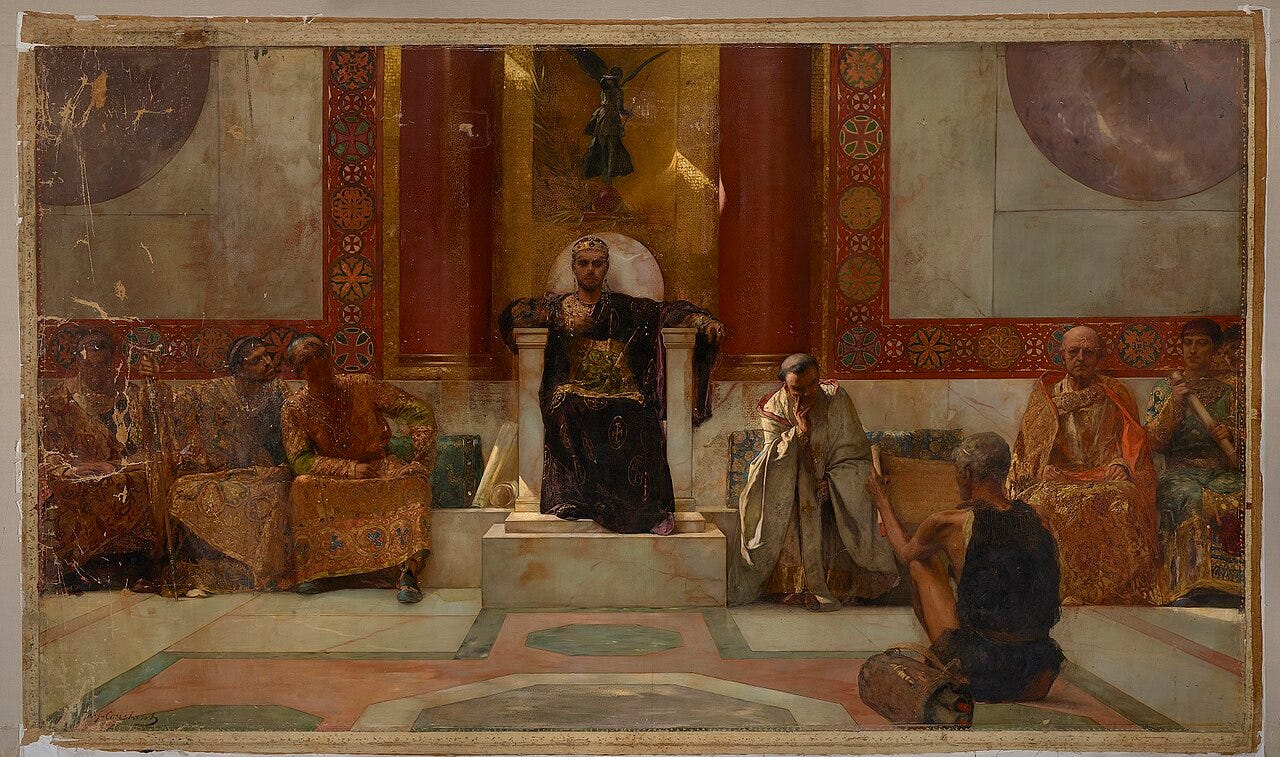
The Lombards Deliver the Verdict
Justinian died in 565. Three years later, the Lombards invaded Italy. The timing could hardly have been more brutal.
The imperial government had spent nearly two decades fighting to recover Italy. Yet within a few years of Justinian’s death, large parts of the peninsula were outside effective imperial control.
This is one of the reasons Justinian’s western policy has often been judged a failure. From the western perspective, the reconquest was temporary. The Lombards arrived in 568. North Africa would eventually be lost to the armies of Islam. The western Mediterranean that Justinian had attempted to reunify would once again fragment.
But there is another way of looking at the story. Perhaps Justinian did not fail because he was attempting to restore Rome. Perhaps he succeeded in demonstrating how difficult it had become to restore Rome.
So Did Justinian Lose Rome?
The title of this article contains a deliberate contradiction. Justinian did not simply “lose Rome.” He conquered it. He lost it. He conquered it again. He rebuilt it. And ultimately, his successors struggled to hold it.
The deeper question is therefore not whether Justinian personally lost Rome. It is whether the Roman world he imagined was still recoverable.
The answer may be no. The West had changed too profoundly. The old imperial political system had disappeared in much of Europe. New kingdoms had developed their own elites and institutions. The Roman Empire remained enormously powerful, but it was no longer the same empire that had ruled the Mediterranean in the age of Augustus.
Justinian’s achievement was therefore both extraordinary and paradoxical. He was perhaps the last emperor who could seriously attempt to restore the Mediterranean Roman Empire. And he may also have been the emperor who demonstrated that the old empire could no longer be restored in anything more than fragments.
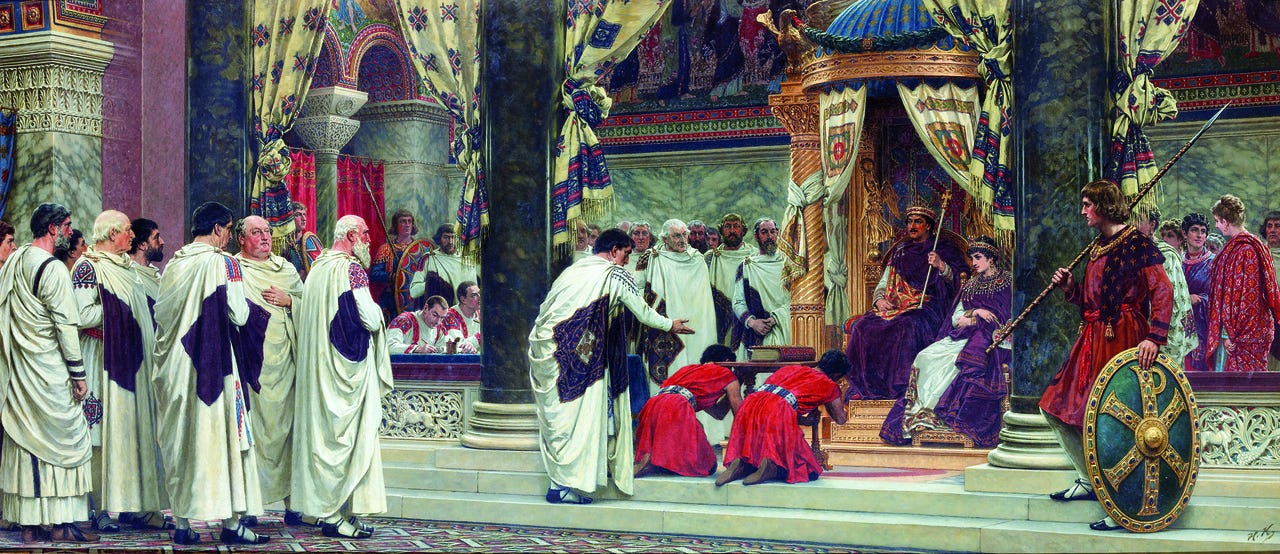
The Impossible Dream
There is a temptation to judge Justinian by what happened after his death. That makes the reconquests look like an expensive failure. But that judgment misses something important.
For almost four decades Justinian governed one of the most ambitious imperial projects of late antiquity. He rebuilt Constantinople. He transformed Roman law. He defeated the Vandals. He destroyed the Ostrogothic kingdom. He brought Rome back under imperial rule. He extended Roman authority into Spain. He patronized architecture on a scale that still astonishes us.
He came closer than any emperor after Theodosius to restoring the territorial unity of the Roman Mediterranean.
And yet the very scale of his ambition created a problem. An empire can be restored on a map much more easily than it can be restored in reality.
Justinian could send Belisarius to Carthage. He could send armies to Italy. He could issue laws from Constantinople. He could raise taxes. He could build Hagia Sophia. But he could not recreate the demographic, economic and political conditions of the fourth-century Roman world.
The Roman Empire that survived Justinian would therefore become something new. It would lose much of Italy. It would eventually lose Syria and Egypt. It would become increasingly Greek-speaking. Its armies and institutions would evolve. Its political centre would remain Constantinople. And yet its emperors would continue to call themselves Roman.
That is perhaps Justinian’s greatest historical paradox. He did not restore the old Roman Empire. He helped create the empire that would survive Rome.
Rome did not die in Justinian’s lifetime. It changed.
And perhaps that is the real story of Justinian. Not the emperor who failed to resurrect Rome, but the emperor who stood at the precise moment when the ancient Roman world was becoming something else.
His dream was impossible. But for a brief, astonishing moment, he almost made it real.
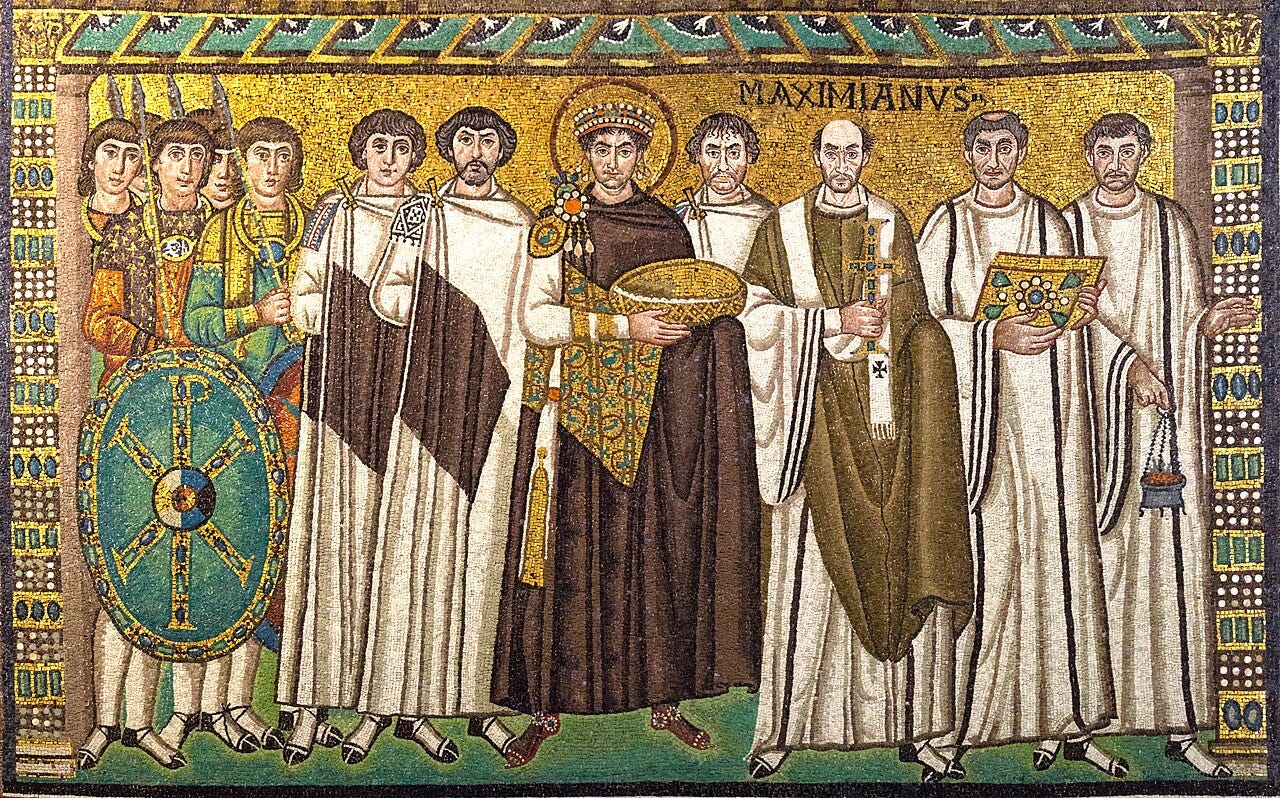
Featured Image: Court of Emperor Justinian with Archbishop Maximian of Ravenna and three other clerics on Justinian's right, and two court officials and his guards on his left. (Roger Culos / CC BY-SA 3.0)
References
Procopius, Wars of Justinian.
Procopius, Buildings.
Procopius, Secret History.
Michael Maas (ed.), The Cambridge Companion to the Age of Justinian.
Angeliki E. Laiou and Cécile Morrisson, The Byzantine Economy.
Michele Renee Salzman, The Falls of Rome: The Later Roman Empire and the Decline of the West.
Peter Sarris, Economy and Society in the Age of Justinian.
Hugh Kennedy, The Mediterranean World in Late Antiquity.
Leslie Ivings is also the author of Byzantine Emperor Constantine V, Pen & Sword (2025)

Constantine V - warrior, reformer, and one of Byzantium’s most formidable emperors. A brilliant general who crushed the Arab advance, strengthened the crumbling empire, and won the loyalty of his soldiers long after his death.
But history has not been kind. A fierce iconoclast, hated by the church and smeared by monastic chroniclers, he was branded Copronymos (“the dung-named”), compared to a sorcerer - even the Antichrist.
Married three times, politically astute, and as influential in theology as he was on the battlefield, Constantine’s legacy rivals Justinian himself. Yet unlike Justinian, he died not in splendour, but leading his army on campaign in Bulgaria.
Listen to Leslie Ivings discuss his book on our podcast:
The Dung Emperor: Constantine V

Petros Koutoupis sits down with historian and author, Leslie Ivings, to discuss his latest publication: Byzantine Emperor Constantine V, 'the Dung-named': General, Patriarch, Iconoclast, Reformer. Who was Constantine V, what great things did he accomplish during his reign and why were the Byzantine chroniclers harsh with his legacy? We will answer these…


Thank you