


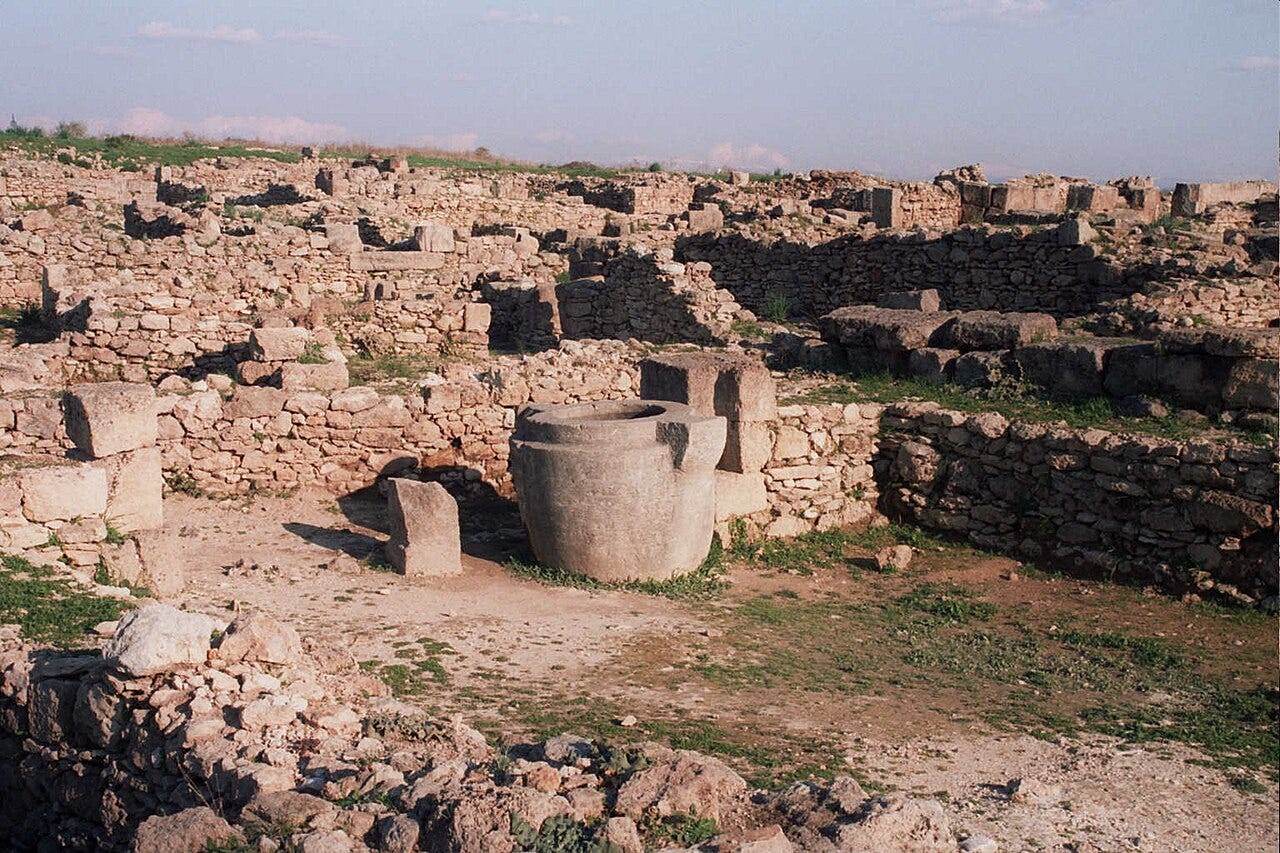
The ancient city of Ugarit in modern Syria remained nothing more than a legend buried beneath a great mound of earth until its discovery in 1928. Thousands of years of settlements from the Neolithic to the Late Bronze Age were stacked atop one another, forming its mass. During Ugarit’s last era, grand temples, palaces, and libraries overlooked the glistening waters of the Levantine Mediterranean. Texts, records, and correspondence were written in at least eight different languages. Their own written language was among the first alphabetic systems in recorded history, one used to decipher religious texts of the modern world.
Yet, for all that Ugarit accomplished, it was their god and his epic that commanded eternal reverence. Baal, god of storms, fought his way to power, swaying Death and the Sea to his mighty will. His reputation faltered as a new religion swept through the Levant, condemning him as evil. Perhaps he was too powerful. His worship was widespread, an unstoppable force of earned legitimacy. Ugarit found its legitimacy through its own pragmatism and the foundations of a god’s accession. It was only inevitable that a singular god would see in himself the power that Baal once had.
A Kingdom of Trade and Tales
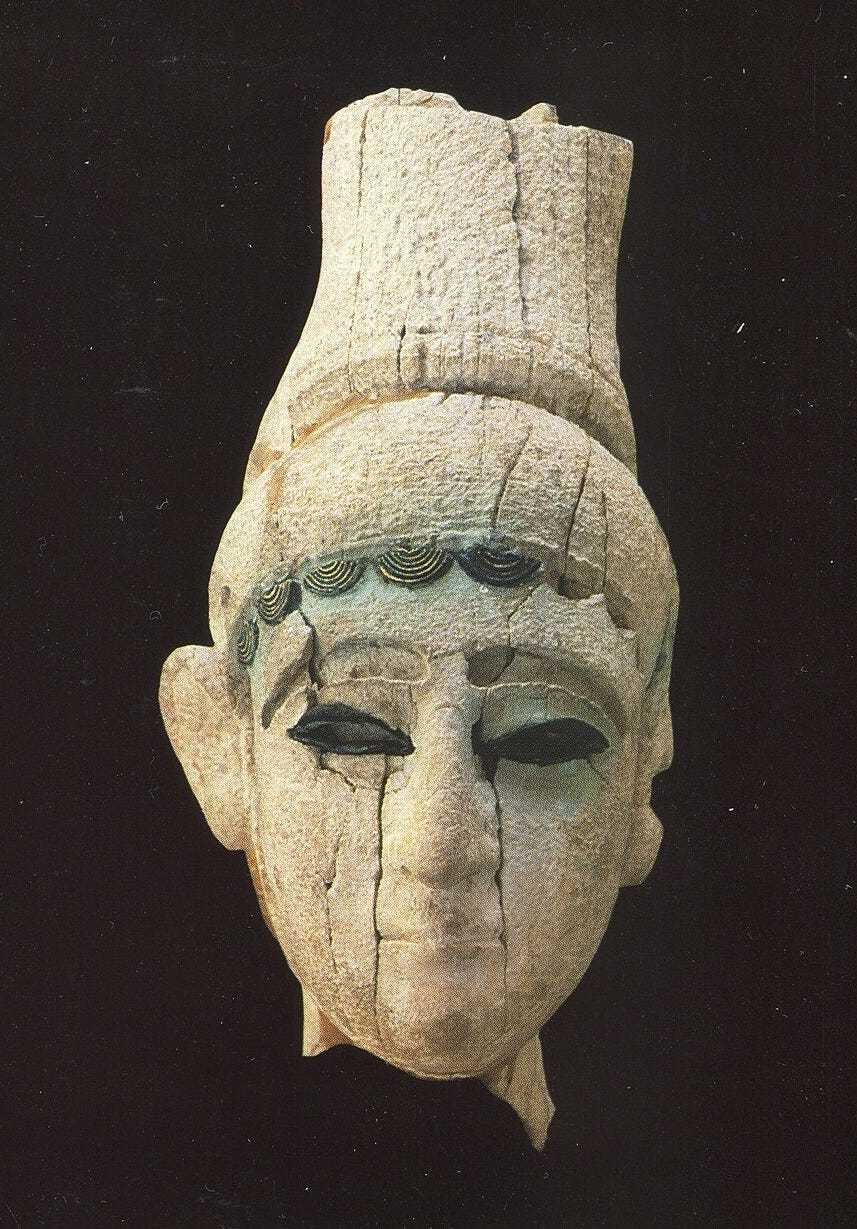
Ugarit was never a major player in military exploits. They found their success in maritime trade and clever alliances. As a fortified seaport, they catered to those who could benefit them. Egypt, Cyprus, Crete, the Cyclades, and Mesopotamia relied on their strategic location along the shores of the Northern Levant. During the Middle Bronze Age, kings of Egypt gifted sovereigns of Ugarit stela, statuettes, and carnelian. Shells from Crete, cylinder seals from Babylonia, pottery from Mycenae, and art of stela, bronze, and ceremonial ivory displaying the flair of Syria and Egypt further attest to their expansive network. By the time of Egypt’s New Kingdom, they thrived as a booming trade center. A golden age of architecture decorated a city equally elevated atop a lofty acropolis.
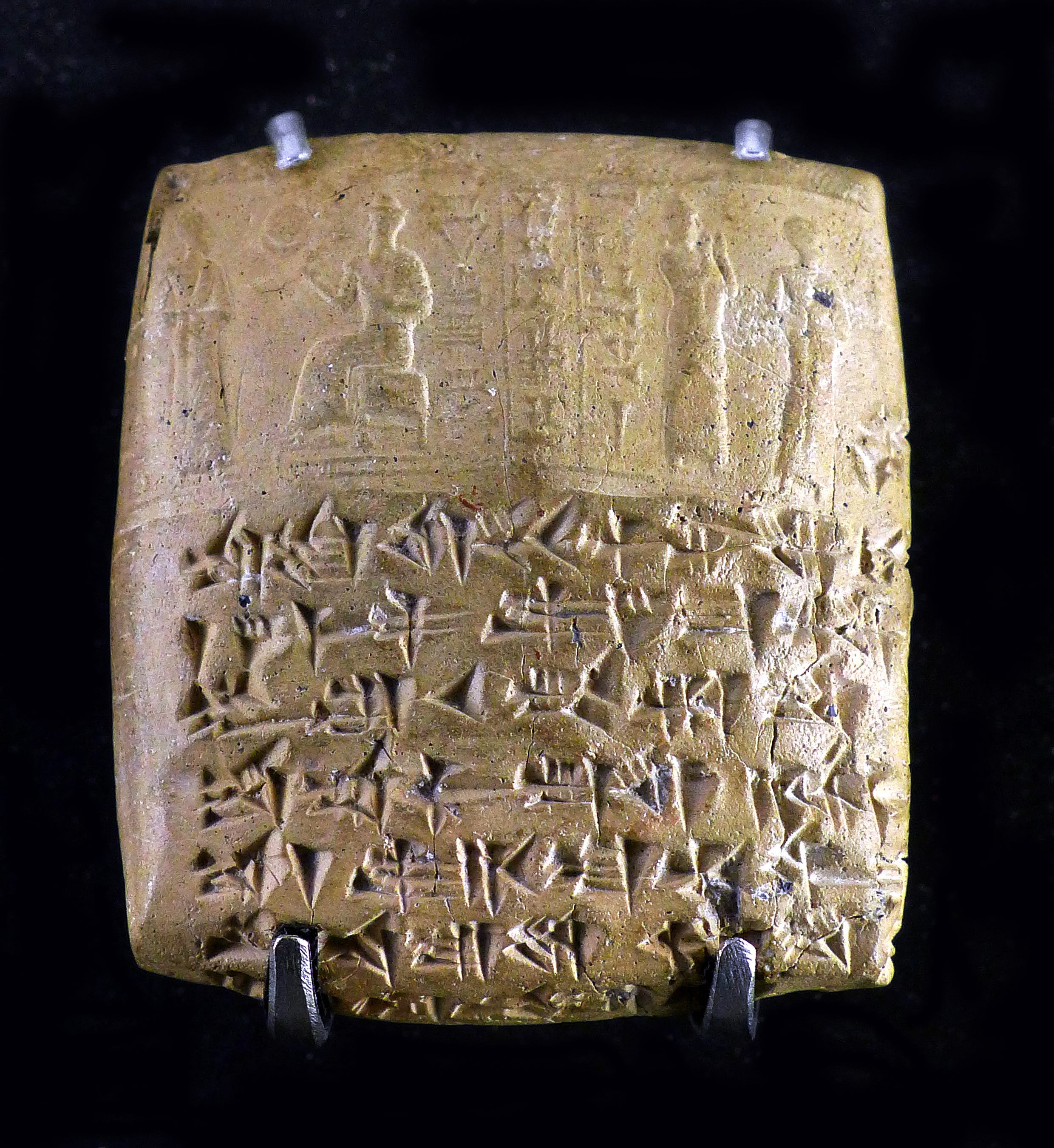
Fortunately, Ugarit’s golden age produced a plethora of documentation. The city housed multilingual archives in languages such as Egyptian, Sumerian, Akkadian, Hurrian, Hittite, Luwian, and Cypriot-Minoan. Private residents as well as palatial institutions kept meticulous records of anything from trade to social and cultural life. Temple libraries provide ample evidence of their alphabetic system, consisting of thirty letters written in cuneiform, a notable departure from syllabic or pictorial writing systems.

As the world around vied for supremacy, Ugarit, as a trade hub, could not entirely stand on its own. From c. 1600 – 1200 BCE, it relied on the good graces of Egypt and Cyprus, who proved formidable allies. Even as the Hittites took control of their city around 1340 – 1300 BCE, they used them to their full advantage. At times, they offered military, financial, and economic support to the whims of their overlords. Other times, they exploited their weaknesses. When Rameses II battled the Hittites at Kadesh, the Ugaritians fought alongside them, but the moment failure was imminent, they fell back into the welcoming embrace of Egypt, with seemingly little consequence. They, themselves, never instigated war. Ugarit’s strength was in its diplomacy.
At the end of the Bronze Age, Ugarit collapsed just as most of its neighbors did. The pressures of a new age could not sustain them. The palace-temple economy that ruled them fell apart as people expanded out into the countryside. Natural disasters and the migration of the legendary Sea Peoples hastened the demise of their now fragile port, and they, along with the Hittites, became seemingly lost to the world that once was. Though the city would remain in obscurity until a 20th-century farmer uncovered the tomb that brought archaeologists to the base of its hill, Ugarit somehow continued to influence those around them.
The Battle of Storm, Sea, and Death
The myriads of bilingual and multilingual texts from Late Bronze Age Ugarit no doubt demonstrate impressive cordialities that may support why they never had any enemies. More so, it shows a rather remarkable affinity toward storytelling. Among their religious texts are many of the same stories that circulated through the region, such as Gilgamesh and the great flood. It also shows that they worshipped the same deities, the storm god Baal and the supreme El, creator and father of gods.
At the time, Baal’s worship was widespread. People throughout the Levant, Phoenicia, and even Egypt knew Baal by one of his many names. He was a king who represented order, overcoming the forces of chaos that disrupted nature’s delicate balance. He was the Rider of the Clouds, the Mighty One, the one without equal, Lord of heaven and earth; there was none above him. His foundational epic describes the scenes that shaped the seasons and made the Levant such a fertile landscape, culturally and agriculturally.
The Baal Cycle is a story of cosmic proportions. It portrays Baal’s struggle in subduing his opposition, the god of the sea and the god of drought and death. Though somewhat fragmentary, what remains etched on clay tablets tells a tale of drama and perpetual defiance. The story begins with Baal feasting among his fellow gods along with his sister and consort, Anat, goddess of war, known to wear the heads of her victims upon her chest. During this time, Baal has no palace to call his own; recognition of his sovereignty completely depended upon his father, the supreme El.
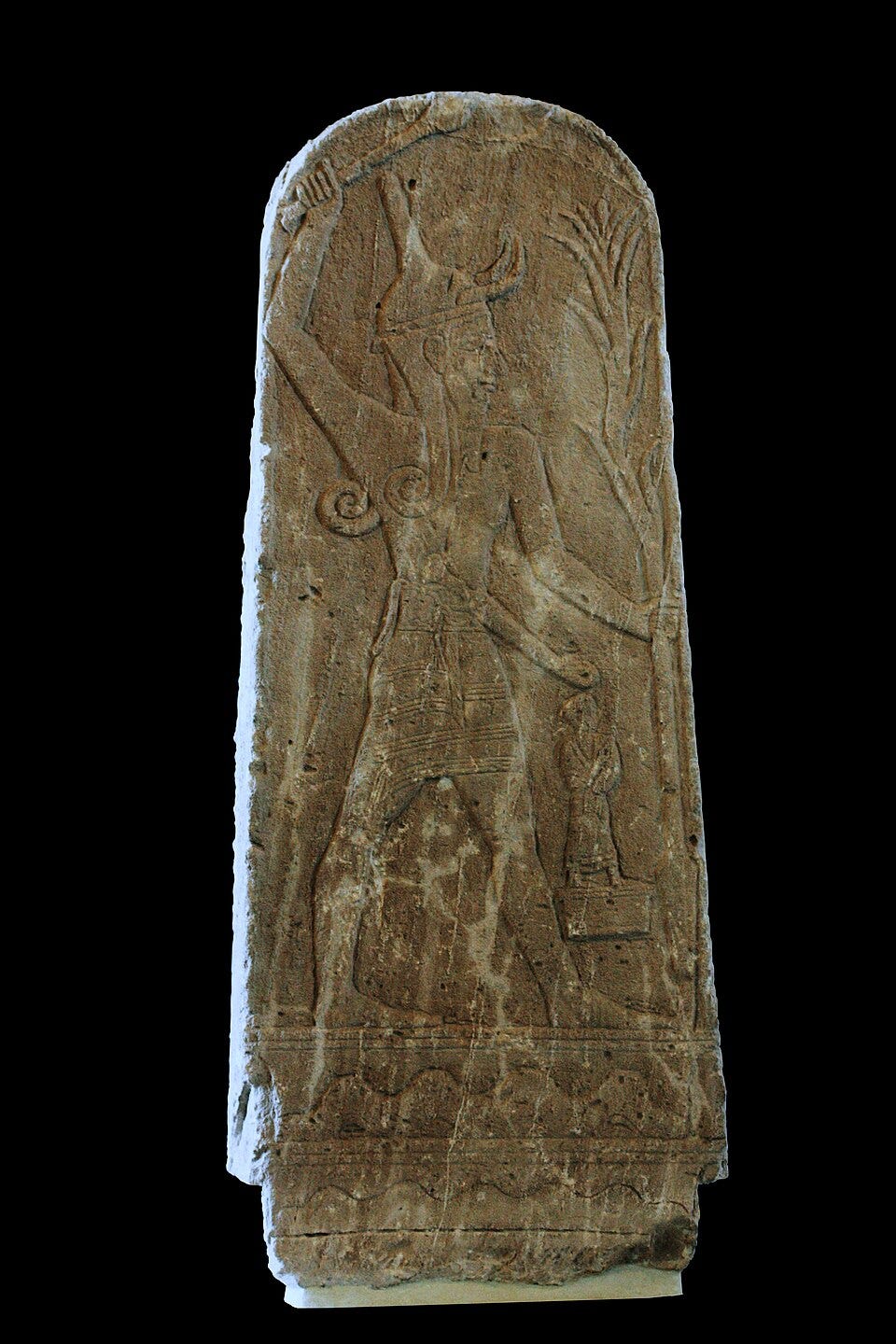
When the ruthless god of the sea, Yamm, sent his messengers to demand obedience, claiming he is the most powerful of gods, Baal simply asked what clever speech the god had prepared for him. Yamm’s messengers boldly declared the sea god’s claim to Baal. But the storm god would never surrender to a god so presumptuous. With weapons fashioned by the divine craftsman of Egypt, Kothar-wa-Hasis, Baal readied himself to face the savage Sea. Anat spoke to her husband, battle looming.
“To earth shall fall the strong,
To dust the mighty…
I tell thee, O Prince Baal,
I declare O Rider of the Clouds.
Now thine enemy wilt thy smite,
Now wilt thy cut off thy adversary.
Thou’lt take thy eternal kingdom,
Thine everlasting dominion.”
“Kothar brings down two clubs
And gives them names…
Do thou swoop in the hand of Baal,
Like an eagle between his fingers;
It strikes the pate of Prince Yamm…
Yamm collapses,
He falls to the ground;
His joints bend,
His frame breaks.”(Pritchard translation)
Baal had won, and Yamm was forever imprisoned, but victory was not enough. A god was nothing without a worthy house. Alas, El granted Baal his palace, thanks to the persuasions of his and El’s consorts, and the storm god’s kingship was finally legitimized. From his throne upon Mount Saphon, Baal’s thunder shook the earth, his dominion stretching to mortal cities near and far. Yet divine glory would inevitably awaken another fearsome foe. Mot, another son of El and personification of death, came to claim Baal just as Yamm had tried and failed.
Anger festered in Mot at the thought of being excluded from the divine feast of gods. He threatened Baal, wanting to use the terror of deathly invocations to consume his brother. Briefly, Mot succeeded. Baal was swallowed by his ghastly brother, and with the storm god gone, droughts came, and the earth began to wither. Just as Baal to Yamm, Anat would not submit so easily to Mot. She hunted him with a chilling vengeance, violence spilling out of her until Mot was dead, ground up and scattered to ash.
“With the sword she doth cleave him
With fan she doth winnow him
With fire she doth burn him.
With hand-mill she grinds him.
In fields she doth sow him.
Birds eat his remnants,
Consuming his portions,
Flitting from remnant to remnant.”
Mot had been consumed as he once did to Baal. Meanwhile, sun goddess Shapshu scoured the earth for the fallen storm god. Baal triumphantly returned. Still, Death can never truly ever die, not in the same way a mortal can. The cycle of storm and death’s struggle restores itself time and time again, as seasons change, as Baal returns to his throne.
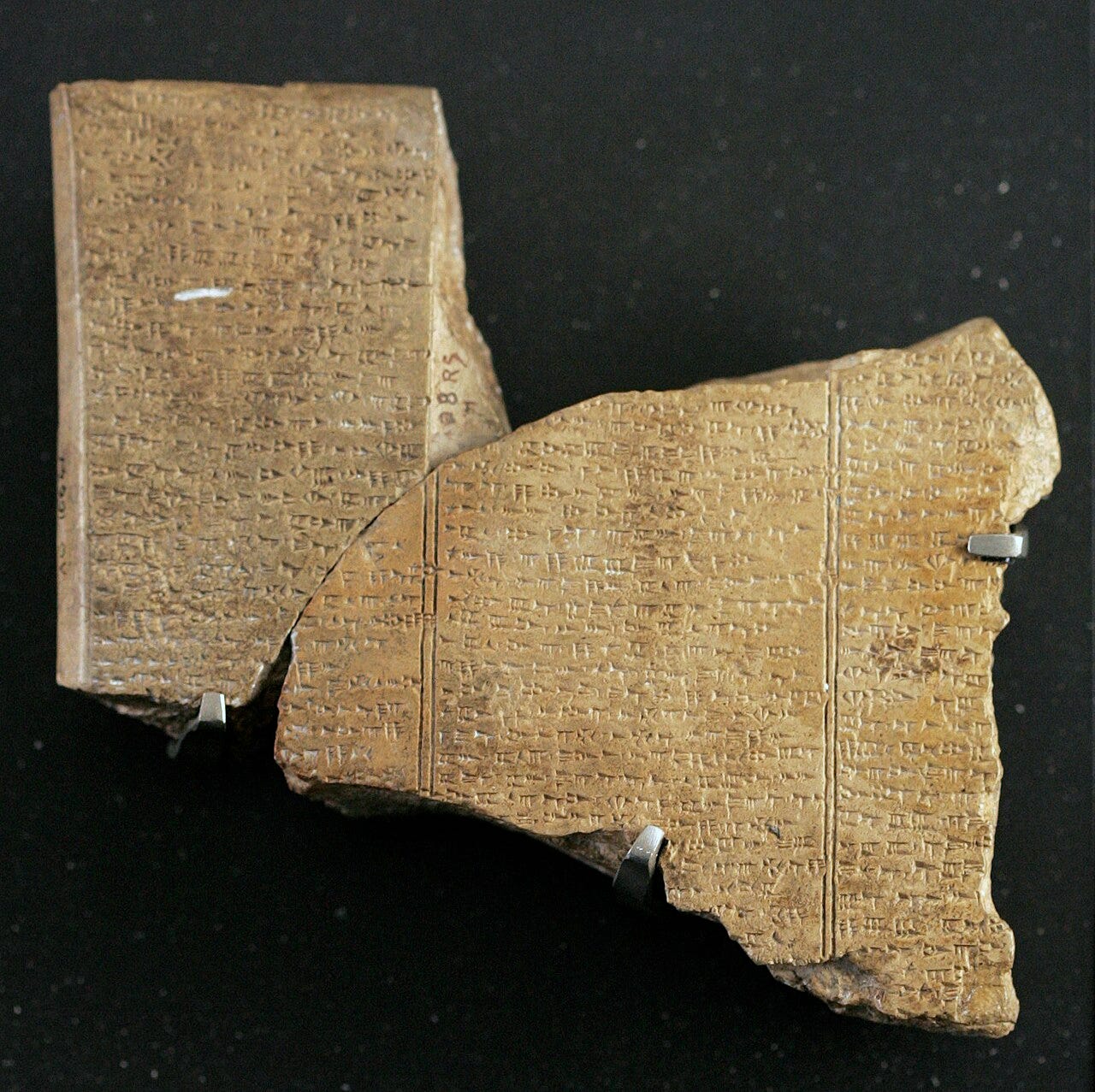
Common Themes in Baal and the Bible
The Ugaritic Baal Cycle is one of many ancient texts that describes agricultural cycles and the precarity of death as a unifying narrative. More specifically, however, these texts follow very similar patterns, especially throughout the ancient Near East and Mediterranean. Not so surprisingly, they also involve the sea as a catalyst for order overcoming chaos. Versions may slightly vary in their telling; some may incorporate a grain goddess of sorts who works to appease the storm god, becoming something of a consort. Others may be intertwined within creation stories.
In Mesopotamia, after the chaos that ensued from Inanna’s descent into the underworld, Tammuz, the god of the fertile spring, was chosen to reside in the underworld for part of the year. In Egypt, the death of Osiris at the hands of his brother, Seth, was connected to the rise and fall of the Nile. In the Contendings of Horus and Seth, Horus fights for his rightful place as Osiris’s successor against the brother and perpetrator of his father’s slaughter. Similar to Baal, the series of battles is headed by a divine assembly, a supreme entity who ultimately decides the fate of the next king. Horus earned his victory through fierce struggle and was granted legitimacy. Baal was granted a palace and legitimacy in the eyes of the gods and his people.
The theme of agricultural cycles, battles between gods, and kingship carried on even as civilizations collapsed at the end of the Bronze Age. The ancient Canaanite culture, indigenous to the Levant, transformed into the Israelite culture. Gods became a singular presence and new stories were told of creation, chaos, and order. As such, the city of Ugarit becomes far more important. Linguistically, the written languages of Ugaritic and Hebrew are so similar that biblical scholars have used Ugaritic to decipher challenging words and phrases that otherwise would have been subject to interpretation. Both systems share an identical alphabetic order, as well as a consonantal structure referred to as Abjad, meaning that short vowels were generally omitted.
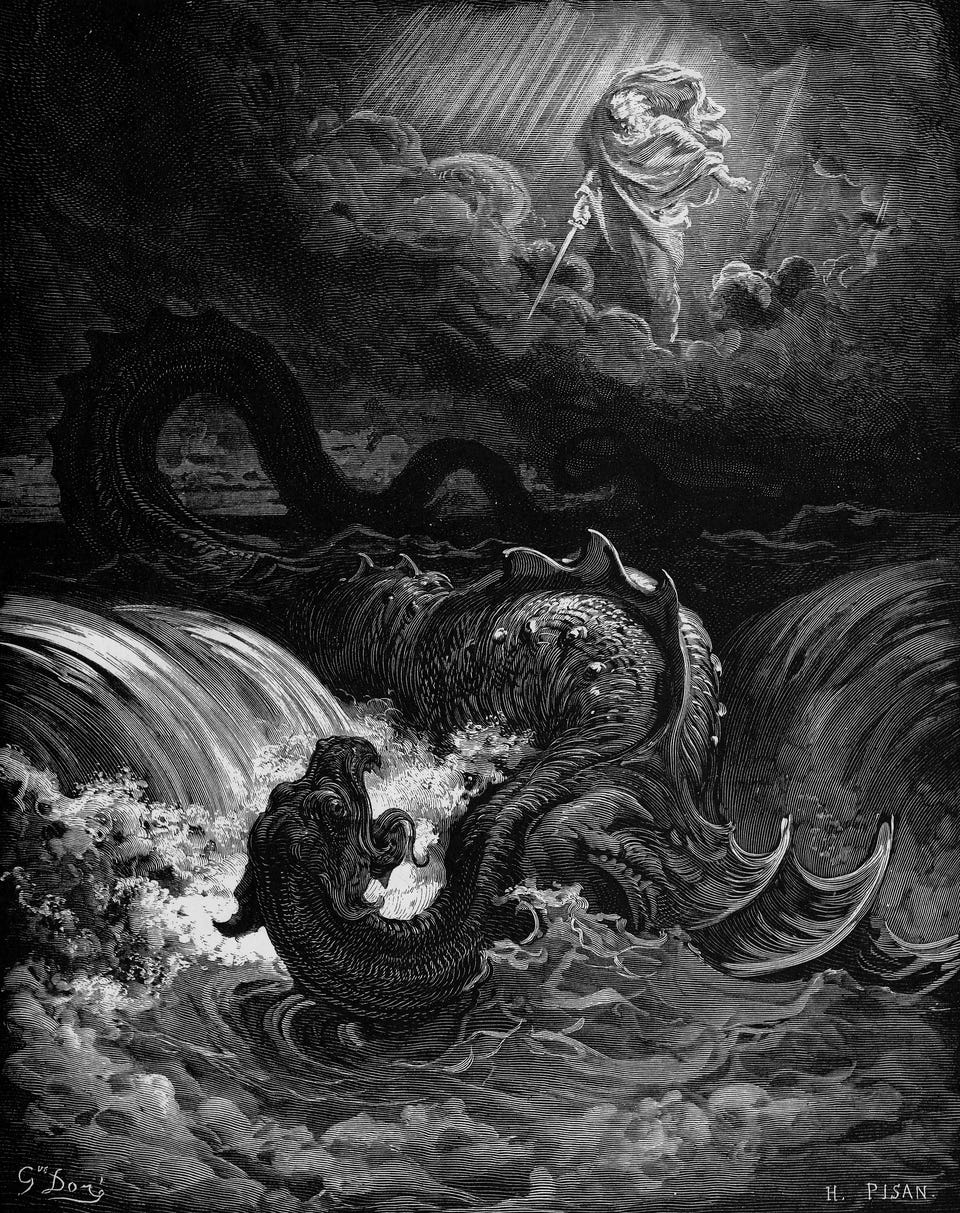
What these findings reveal is that the Ugaritic and Hebrew languages were vastly similar, both expectedly being from the same Semitic family. Additionally, as expected, the two cultures would also share a great deal of literary parallels. Israelite texts have often called Baal a false god in opposition to Yahweh. Yet one cannot help but notice the familiar ways in which battles were fought and divine palaces erected. Sequential events in the Old Testament are remarkably similar to those of the Baal Cycle: the battle of the sea, the coming of the city of heaven, and finally, Death’s defeat.
“Yet, God, my king from the first, author of saving acts throughout the earth,
by your power you split the sea in two, and smashed the heads of the monsters on the waters.
You crushed Leviathan’s heads, gave him as food to the wild animals.
You released the springs and brooks, and turned primordial rivers into dry land.
Yours is the day and yours the night, you caused sun and light to exist,
you fixed all the boundaries of the earth, you created summer and winter.” (Psalms 74:12-17)
“Then I saw a new heaven and a new earth; the first heaven and the first earth had disappeared now, and there was no longer any sea.
I saw the holy city, the new Jerusalem, coming down out of heaven from God, prepared as a bride dressed for her husband.
Then I heard a loud voice call from the throne, ‘Look, here God lives among human beings. He will make his home among them; they will be his people, and he will be their God, God-with-them.
He will wipe away all tears from their eyes; there will be no more death, and no more mourning or sadness or pain. The world of the past has gone.” (Revelation 21:1-4)
Further, early Israelite theologies state that Yahweh’s earthly palace was built atop a mountain, just as Baal’s, but more specifically, as per symbolic tradition, to represent the boundary between the earth and the sky, heaven. Gods throughout the ancient world took up earthly residence atop mountains; one primary example would be the entirety of the Greek major pantheon and their supreme god of storms, Zeus, on Mount Olympus. What is more compelling, still, is the epithet by which Baal was identified, Rider of Clouds, being reimagined to describe Yahweh in multiple verses.
“Sing to God, play music to his name, build a road for the Rider of the Clouds, rejoice in Yahweh, dance before him.” (Psalms 68:4)
“…build your palace on the waters above, making the clouds your chariot, gliding on the wings of the wind.” (Psalms 104:3)
“No one is like the God of Jeshurun: he rides the heavens to your rescue, rides the clouds in his majesty!” (Deuteronomy 33:26)
Psalms 135:7 claims that Yahweh can summon clouds, bring rain, lightning, and wind. In Matthew 8:23-27, Jesus soothes his disciples aboard a boat caught in a raging storm by simply rebuking the winds and calming the sea. Throughout the ancient world, weather and agriculture determined sustainability. As such, myths often reflect geographical, political, and social issues tied to a people’s ability to thrive. Themes associated with the sea may be a reflection of advancements in trade routes and conflicts between seafarers, fishermen, and piratical groups. Further themes, such as droughts and death, profoundly affect humanity. Mythology gives reason to suffering through the struggles of gods. And those who can control the weather ultimately control the world.
Still, the parallels seen between Ugarit and biblical writers do not assume that Baal was repurposed as Yahweh. Rather, it shows a broader familiarity with Northern Semitic religious expressions that emphasize the significance of storms, sea, divine kinship, fertility, and chaos. Where Baal establishes his authority and legitimacy by defeating the Sea and securing his divine palace, Yahweh is portrayed as the supreme creator and king who already commands the sea and cosmos. Ugarit, therefore, offers a missing piece in Canaanite cultural and religious evolution and transformation through those with whom they shared cultural ties and interacted. As other religions have done, the Israelites likely aspired to distinguish themselves from their neighbors while still honoring their heritage. Inherited stories, the conflicts of man, and perhaps the authority of Ugaritic Baal may have shaped the might of a god, but that god would have his own story to tell.
Featured image: Ruins of Ugarit (modern day Raš Shamra, Syria). ( Loris Romito / CC BY-SA 3.0)
References
King, J. 2012. Ugarit. World History Encyclopedia. Available at https://www.worldhistory.org/ugarit/
Schaeffer, C.F.A. 2025. Ugarit: Ancient City, Syria. Encyclopedia Britannica. Available at: https://www.britannica.com/place/Ugarit
Atwood, R. 2021. The Ugarit Archives. Archaeology Magazine. Available at: https://archaeology.org/issues/july-august-2021/features/ugarit-bronze-age-archive/
Benner, J.A. 2026. Ugarit and the Bible. Ancient Hebrew Research Center. Available at: https://www.ancient-hebrew.org/biblical-history/ugarit-and-the-bible.htm
Pritchard, J.B. 1969. Ancient Near East Texts Related to the Old Testament. Princeton University Press. Available at: https://www.marquette.edu/maqom/baalyamm.pdf
Lutz, R.C. 2019. The Baal Myth from Ugarit. Available at: https://www.ebsco.com/research-starters/religion-and-philosophy/baal-myth-ugarit
Old Testament excerpts retrieved from https://www.catholic.org/bible/old_testament.php


.jpg)


Interesting, but according to scholars Yahweh, while indeed a god on a cloud-covered mountain top of storms and thunderbolts was a southern desert deity who moved north from the borderlands (Sinai). The Old Testament is full of the zeal of his cult as his priests insisted on his sole rule and worship, the reason why so many of the kings and the northern kingdom are condemned as disloyal to him. Older folk traditions and histories and origin myths of the Middle East and of the Jewish tribal past and its two kingdoms were taken up and assembled by the returning Jewish elite from exile in Babylon to fashion a national propaganda. There is, of course, no archaeological trace of some of the most popular Biblical traditions, such as of Solomon - plausibly an appropriation of the memory and splendor of the Assyrian king Shalmaneser III. In contrast, there is material evidence of an early David ("House of David"), a source of enduring national myth as often with many founders of royal houses from humble origins as raiders and mercenaries.
The depopulation of Ugarit at the end of the Bronze Age may have been caused by a plague that spread around the Mediterranean at that time. The Iliad mentions a plague from Apollo of the rats.
As for the two monsters Yamm sent to fight Baal, perhaps they were two tsunamis resulting from a volcanic eruption. There was also a 100 year drought around 2000 BCE that may have become part of the Ba'al legend.