


Table of Contents
From the Editor
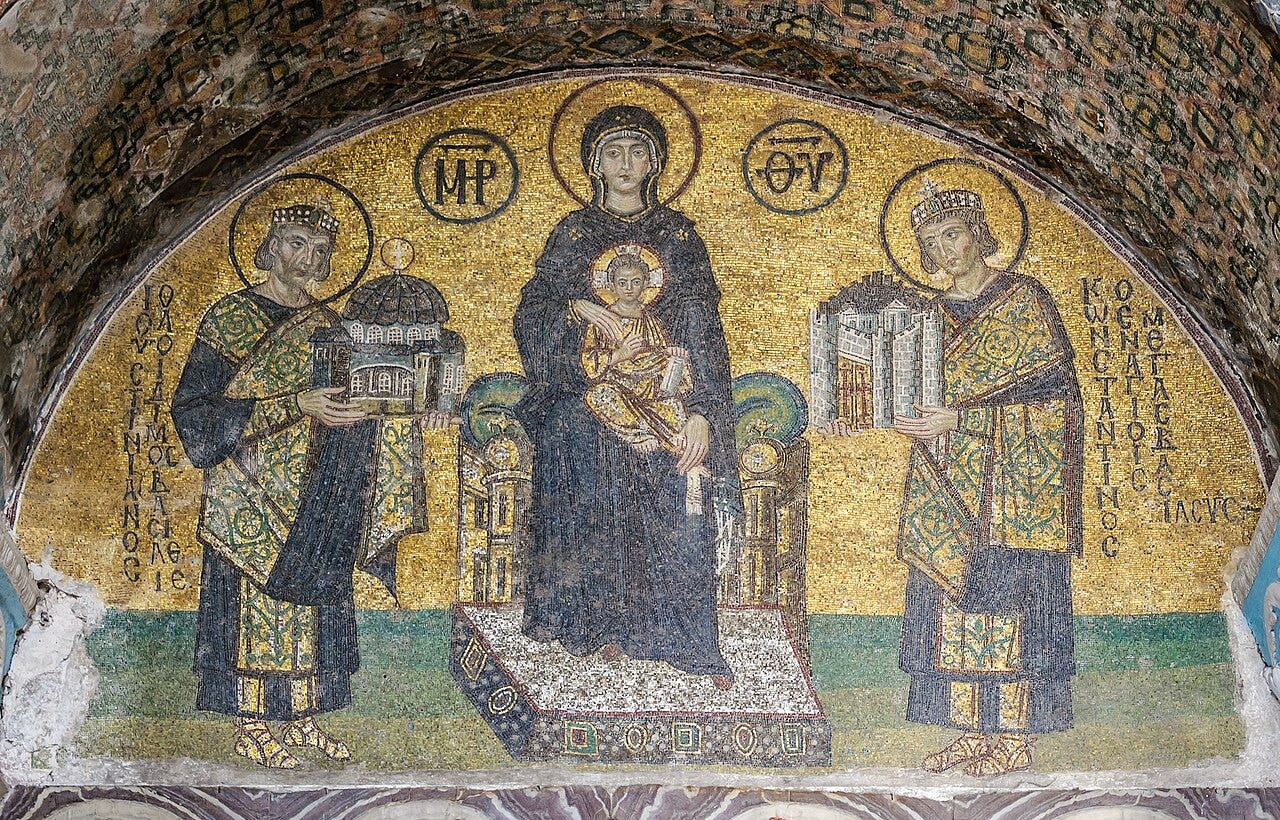
This week we learned about Justinian and how he wanted to bring the Roman Empire back to its former glory, and for a while, it looked like he might actually pull it off. But years of war, a devastating plague, and growing pressure from Rome’s enemies left the empire stretched thin and Italy in ruins. His story is a good reminder that trying to rebuild the past can sometimes create more problems than it solves.

Question for the Reader
Can an empire ever truly restore its past, or does every “restoration” inevitably create something new?
When in Rome…
We also learned that 2,000 years ago, Romans were already grabbing quick meals on the go, with their own version of fast food serving hungry people across the empire. Things like this have a way of reminding us that, in many ways, we really haven’t changed all that much from our ancestors.

Also, be sure to check out the chat. It is a great way to stay engaged with one another and discuss the topics which brought you here in the first place.
In the News
Roman Imperial Bath Found Inside a Palace Tower
Archaeologists in eastern Serbia have uncovered an exceptionally well-preserved Roman bath built inside a corner tower of a fortified imperial palace. The bath includes pools, a steam room, a furnace, and an intact hypocaust system used to heat the floors. Source: HeritageDaily.
Nimrud’s Hidden City Comes Into View
After nearly 180 years of focusing on Nimrud’s palaces and temples, archaeologists are finally getting a closer look at the huge lower city where most of its population lived. Surveys using drones, satellite imagery, and magnetometry are revealing streets, homes, and other structures that have remained buried for centuries. Source: Archaeology Magazine.
A New 4,600-Year-Old Board Game Found in Iran
Archaeologists at Iran’s Burnt City have discovered a previously unknown type of board game dating back roughly 4,600 years. The find adds to the site’s reputation for remarkable gaming artifacts and raises new questions about how people in this Bronze Age city spent their leisure time. Source: Arkeonews.
An Old Kingdom Tomb and Burial Complex at Saqqara
A newly uncovered Old Kingdom tomb at Saqqara belonged to a high-ranking official named Sekhentio-Ptah. The discovery includes a preserved funerary chapel, ritual objects, sealed sarcophagi, and more than 100 ushabti figures, offering a fascinating look at Egyptian burial practices. Source: Ahram Online.
A 2,000-Year-Old Ring Linked to Pontius Pilate
A small copper-alloy ring found at Herodium bears a Greek inscription that may actually represent the Latin name of Pontius Pilate. Researchers believe it probably belonged to a local worker involved with Pilate’s administration rather than the Roman governor himself, providing a rare glimpse into the people who helped run Roman Judea. Source: Archaeology Magazine.
New Spaces and Rare Paintings Found at Ancient Smyrna
Excavations at ancient Smyrna have uncovered three previously unknown rooms along with rare wall paintings dating to Late Antiquity. The discoveries are helping archaeologists piece together what life looked like in one of the ancient Aegean world’s major cities. Source: Türkiye Today.
Quote
If a man is proud of his wealth, he should not be praised until it is known how he employs it. - Socrates
Caption This!
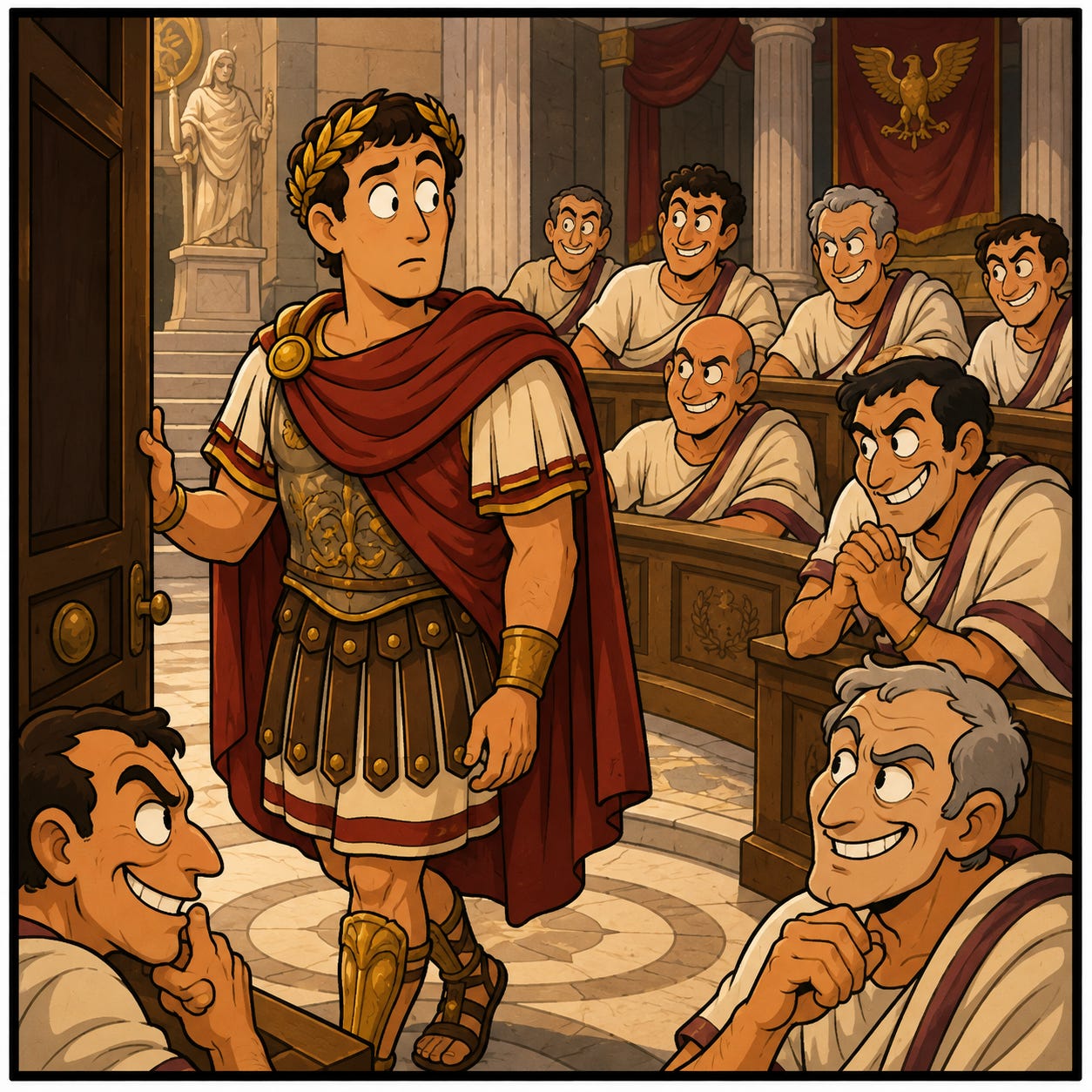
Welcome to a new, fun series where you get to be part of the joke!
Each time, I’ll share a comic panel and leave the caption up to you. Come up with something funny, clever, sarcastic, ridiculous, or completely unexpected. There’s really no wrong answer, as long as it’s appropriate. Just comment below!
The best part? Your submissions could make it into a future “Caption This!” post! I’ll pick some of my favorites and feature them in a follow-up, so you might just see your caption alongside the next panel.
So take a look, get creative, and give me your best caption. I can’t wait to see what you come up with!
Last Week’s Comic Submissions

No submissions this week.
Trivia Question
Last Week’s Trivia Answer
The ancient Mesopotamian ruler credited with creating the world’s first empire is Sargon of Akkad. It is commonly referred to as the Akkadian Empire.
Ask Me Anything
It has been a while since I have done an Ask-Me-Anything video, so, now is your chance to start asking your ancient history focused or Digging Up The Past questions! And once I get enough, a new video will be recorded!
Reminder: Paid Subscriptions are Back!
Just another reminder that Paid Subscriptions are re-enabled! As a paid subscriber, not only will you get special access to both videos and special articles but your contributions will help support my project to continue providing the content you enjoy.
Expect to see fresh new paid subscriber content soon!
Starting today, Digging Up The Past is offering a Halloween promotional sale which ends on October 31st. Is it a bit early for a Halloween promotion? Nope! It is never too early for anything Halloween. 😄 Be sure to not miss out on getting 20% off annual subscriptions for all eternity! Mhua ha ha ha!
Your subscriptions help support the content that goes into making this site possible, including interviews, videos, and other great features. Unfortunately, many of the tools, resources, and guest appearances that make this content possible come with a cost. Your support helps me keep creating and bringing more of this content to you.
Your support is genuinely appreciated. It helps keep the site going and, just as importantly, gives me the motivation to keep creating and sharing more with you!
Featured Image: 10th-century Hagia Sophia mosaic of the Virgin Mary with Christ, flanked by Justinian offering Hagia Sophia and Constantine I presenting Constantinople. (Public Domain)
