


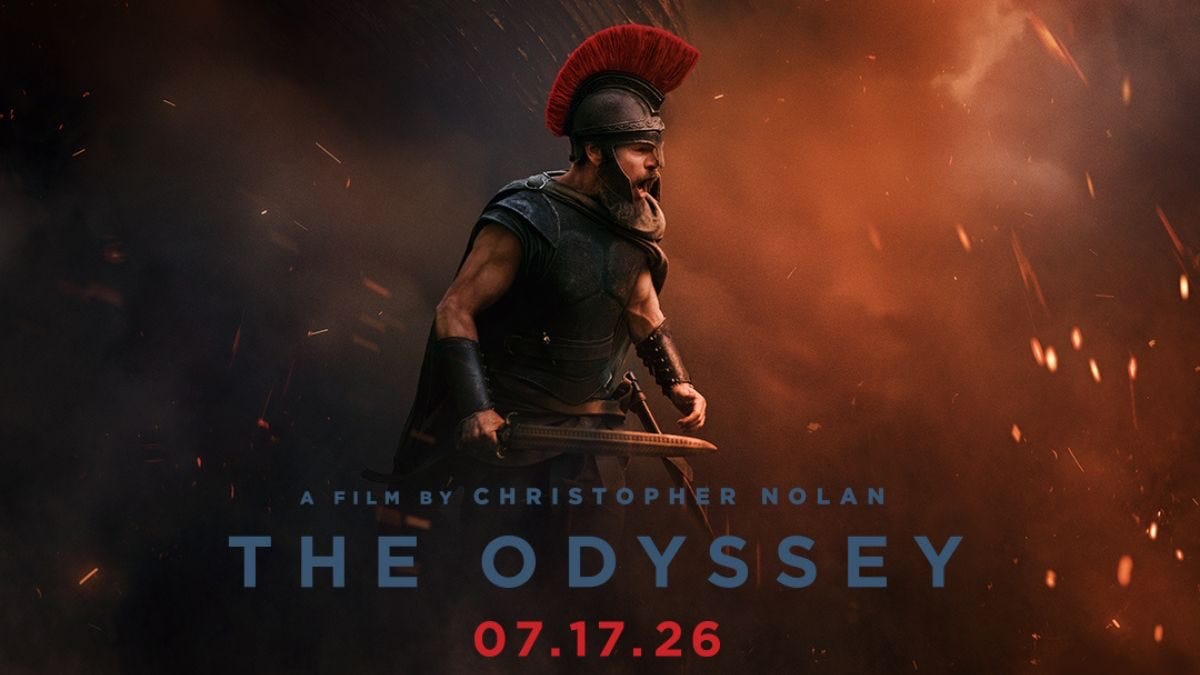
Yesterday, I had the opportunity to watch Christopher Nolan’s The Odyssey, and here are my thoughts and mini-review. There may be some spoilers. Let’s be honest though, it’s like Titanic. You already know how it ends. The only difference is that this story is nearly 3,000 years old.
Anyway, this is a story I have cherished for most of my life. Maybe that’s partly because of my Greek upbringing and the pride that comes with it, but the romantic in me loves it for what it is: a story about love, loss, perseverance, and so much more. At its core, it is a deeply human story that stirs emotions every one of us can relate to.
Taking a step back for a moment, it’s worth looking at how this epic came to be. I’ll keep it brief.
We know that Homer sang these stories in verse, accompanied by the lyre. He may or may not have been blind, but what we do know is that he was a bard. In the bardic tradition, tales of the Trojan War were passed down orally for generations before they were eventually written down.

But did you know that near the end of the Late Bronze Age, there were a series of conflicts between the Mycenaean Greeks and the Hittites along the Anatolian coast, and that a small city called Ilios, or Troy, was caught in the middle? Even more interesting, several of the heroes Homer sang about appear by name on surviving Hittite tablets. These conflicts unfolded over the course of more than a century. As time passed, the events blended together, and an epic was born.
Until these stories were finally committed to writing, multiple versions existed. That’s because a bard’s job was to entertain. With each performance, the story evolved, growing more dramatic and more fantastical as it adapted to its audience.

And that is how I choose to view Nolan’s interpretation. In many ways, he is following the same bardic tradition, telling the story through his own lens for a modern audience. I could sit here and point out every historical or literary inaccuracy until I’m blue in the face, but I think that misses the point. Nolan told the story his way while capturing the same emotions I feel every time I read the original. Yes, he took plenty of artistic liberties [1], but in the grand scheme of things, I don’t think they mattered. I was invested from beginning to end, and there were more than a few moments that nearly brought me to tears.
The movie left such an impression on me that I’m still thinking about it. Nolan’s attention to detail really brought the Homeric world to life. The Mycenaean architecture. The constant references to the Sea Peoples. Story elements pulled from other parts of the Trojan Cycle, including the Nostoi and Iliou Persis, not just the Iliad and the Odyssey. Even the decision to mute the Sirens’ song, sparing both Odysseus and the audience from its temptation.
There is so much to unpack, but one scene in particular immediately took me back to the place I consider my home away from home: Greece. And the scene I am referring to is when we observe the dolphins swimming alongside the ship.
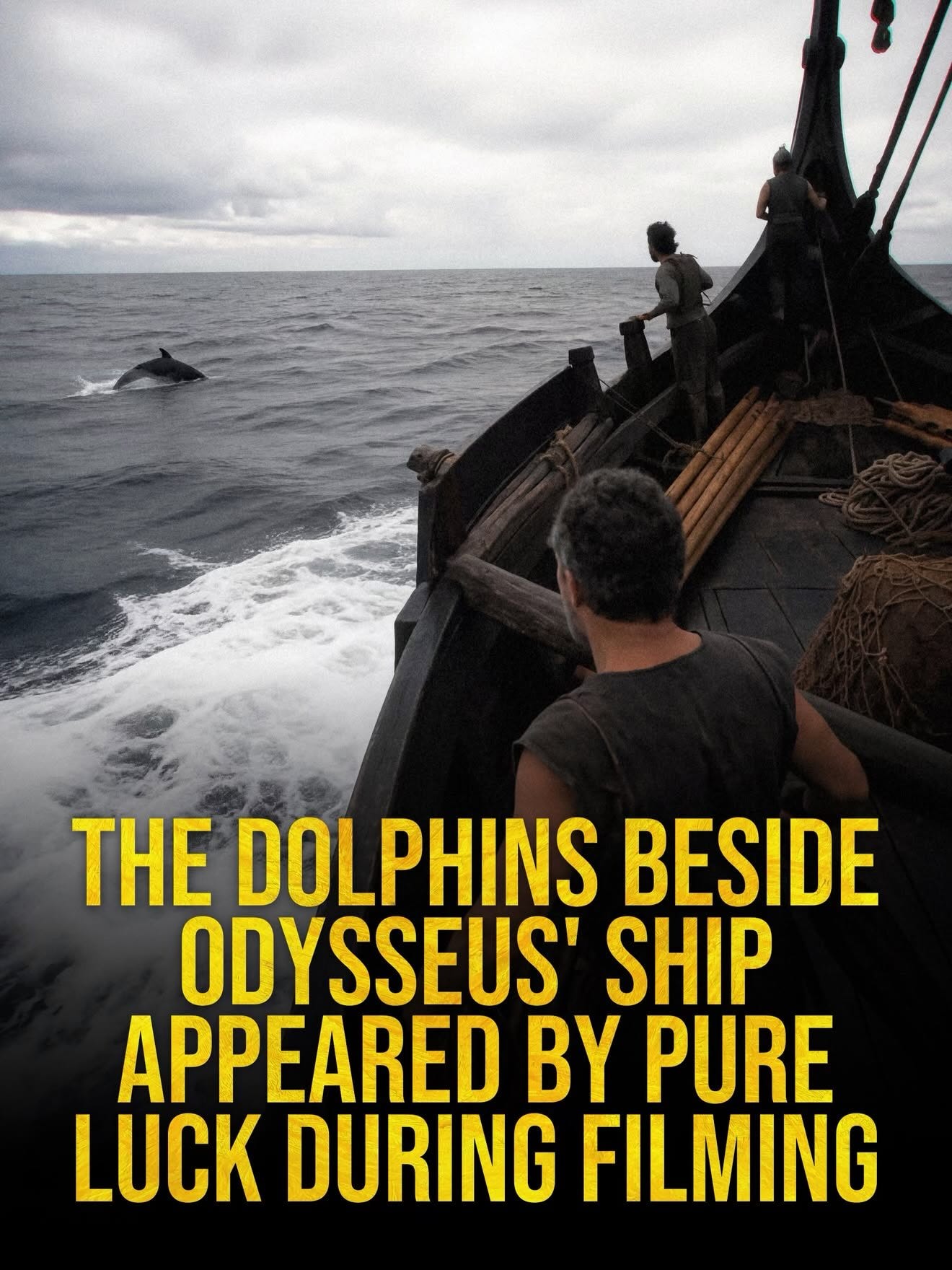
Have you ever watched wild dolphins swimming and playing in the Mediterranean, Homer’s wine-dark sea? I have. Have you ever listened to the seals, their haunting calls echoing across the water like the songs of the Sirens? I have. Or explored the caves that inspired the Underworld and the homes of the Cyclopes? I have.
This is the world that gave birth to the stories we are still telling thousands of years later. It’s hard not to fall in love with it.
Don’t misunderstand me. I’m a purist at heart, but I applaud Nolan for reigniting public interest in one of the greatest stories ever told.
Notes
[1] Here is a very short list of the artistic liberties taken:
Helen and Clytemnestra are are not twins but instead half sisters born to Queen Leda of Sparta.
The Lotus-Eaters were omitted from the film while the lotus and its effects were kept and managed by Calypso.
Circe was an old crone instead of a beautiful seductress.
King Alcinous and the Scherians, omitted.
Odysseus fooling the Cyclops after trying to reason with him, gone.
Odysseus being gifted the wind bag by Aeolus, gone.
Odysseus being handed the moly from Hermes to protect him from Circe’s spells, also not present.
One thing I did appreciate about Nolan’s adaptation is the believability of Odysseus trying to make it back home to his wife and not sleeping with every beautiful woman he meets on his journey.


If it keeps Classicists in jobs and books in print, I’m in. I learned Homer the hard way…in Hamilton Hall, and the easy way…traveling the Peloponnese and Cyclades. And then, once in Dublin for its literary grandchild, Ulysses. No movie is quite as educational as formal study and travel, but it gets people excited and motivated to learn. Thank you for your review.
Great review Petros! I haven't seen the movie yet
Still looking forward to it.